













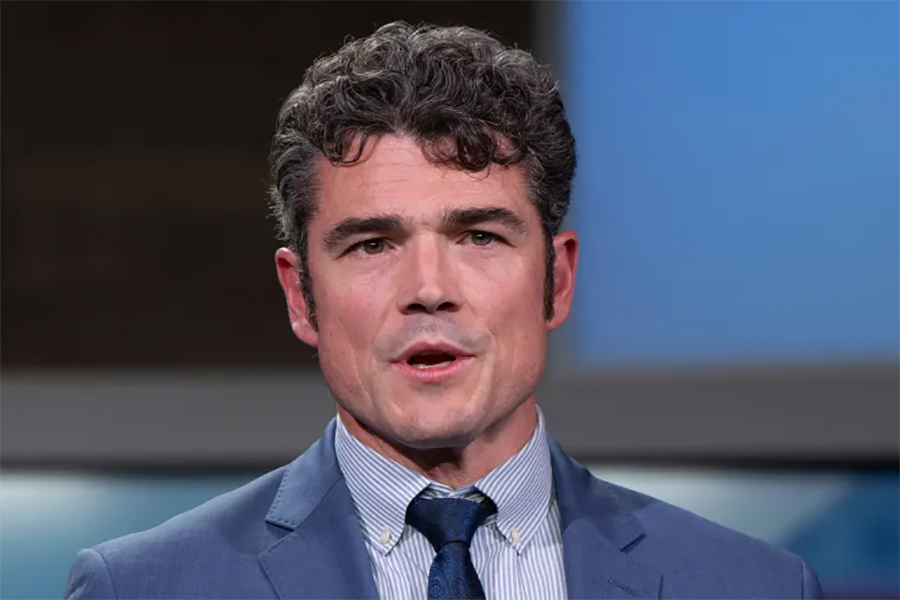

Pokhara, 19 March| Joe Kent, head of the United States National Counterterrorism Center, has resigned from his position in protest against a potential war with Iran. In a resignation letter shared via the social media platform X, Kent addressed President Donald Trump, expressing strong disagreement with the administration’s stance on escalating tensions with Iran. His departure is being viewed as one of the most significant internal dissenting actions within the Trump administration regarding Iran policy.
In his letter, Kent argued that Iran does not pose an immediate threat to the United States, challenging the rationale behind the push toward conflict. He claimed that the move toward war was driven by pressure from Israel and its affiliated lobbying networks in the United States. Describing the situation as “morally indefensible,” Kent stated that he could not support a war based on misleading information. He further accused certain Israeli officials and segments of the American media of spreading inaccurate narratives that influenced policy decisions.
Kent, 45, is a former member of the U.S. Army Special Forces and has been deployed to combat zones eleven times, including service during the Iraq War. After leaving the military, he worked with the Central Intelligence Agency before entering politics. He ran twice as a Republican candidate for Congress but was unsuccessful. His tenure as director of the National Counterterrorism Center lasted only about eight months.
Reflecting on his personal experiences, Kent উল্লেখed the profound impact of war on his life, particularly the loss of his wife, Shannon Kent, who was killed in a suicide bombing in Syria in 2019 while serving as a U.S. Navy cryptologic technician. He emphasized that such experiences have shaped his perspective, making it impossible for him to support sending another generation into wars that do not directly serve American interests.
Following Kent’s resignation, President Trump criticized him, describing him as “weak on security” and stating that his departure was justified. Kent’s remarks about Israel also led some political figures to label him as “anti-Semitic,” although his supporters have defended his stance as principled and courageous.
Analysts suggest that while Kent’s resignation may not immediately alter U.S. foreign policy, it could have notable political implications. With midterm elections approaching, the incident may deepen divisions within Trump’s support base. The development is expected to intensify debate over America’s role in the Middle East and its strategic approach toward Iran, highlighting growing tensions within the administration.