






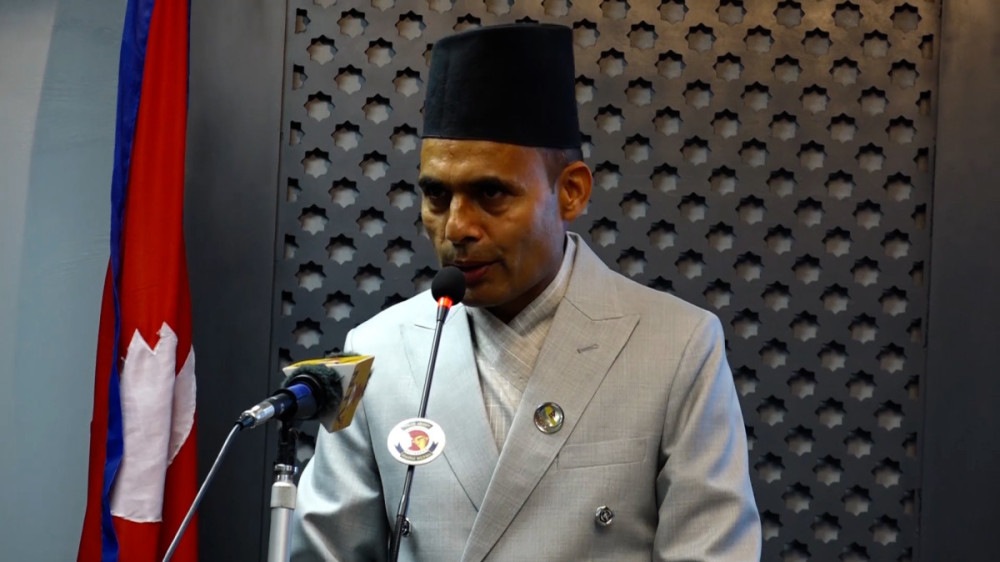

Pokhara, 27 March| Bikram Timilsina, a Member of Parliament from Nuwakot-1, has assumed office as Nepal’s Minister for Communication and Information Technology, bringing with him a blend of academic insight, media experience, and international exposure. Representing the Rastriya Swatantra Party (RSP), Timilsina’s appointment is viewed as a strategic move to strengthen policy communication and enhance transparency within the government.
At 43, Timilsina holds academic credentials from Griffith University and the University of Queensland in Australia, where he pursued higher education and engaged in scholarly work. After completing his studies abroad, he returned to Nepal and became actively involved in teaching, research, and public discourse. His association with the Asian Institute for Advanced Research further reflects his engagement in global academic networks and interdisciplinary studies.
Timilsina’s academic interests span a wide range of subjects, including climate change, geopolitics, social inclusion, and conflict management. These areas of expertise are expected to contribute to informed policymaking, particularly in a ministry that plays a key role in shaping public communication and digital governance. Analysts believe his academic background will help bridge the gap between theoretical knowledge and practical governance.
Before entering politics, Timilsina worked as a lecturer at Tribhuvan University, where he taught international law and diplomacy. He also has hands-on experience in journalism, having worked with Radio Sagarmatha as a media professional. This combination of academic and field experience has equipped him with a nuanced understanding of communication dynamics, both at the institutional and grassroots levels.
Politically, Timilsina joined the RSP approximately two years ago and has since been involved in the party’s international relations department. In the recent parliamentary elections, he secured victory from Nuwakot-1 by defeating prominent leaders such as Prakash Sharan Mahat of the Nepali Congress and Hit Bahadur Tamang of the CPN. His electoral success has positioned him as an emerging figure in Nepal’s evolving political landscape.
As Communication Minister, Timilsina is also expected to serve as the government’s official spokesperson, a role traditionally assigned to the head of this ministry. He has expressed a clear commitment to meeting public expectations, emphasizing accountability, transparency, and effective communication. In recent interactions with the media, he highlighted the importance of conveying government decisions accurately and addressing misinformation in a timely manner.
Timilsina has also indicated plans to leverage digital technologies to improve service delivery and strengthen citizen engagement. “We are fully aware of public expectations and the consequences of our actions,” he stated, underscoring the responsibility his office carries.
Overall, his appointment represents a convergence of academic knowledge, media experience, and political responsibility. Observers are closely watching how Timilsina will navigate the challenges of the communication sector and contribute to building a more transparent and responsive governance system.