









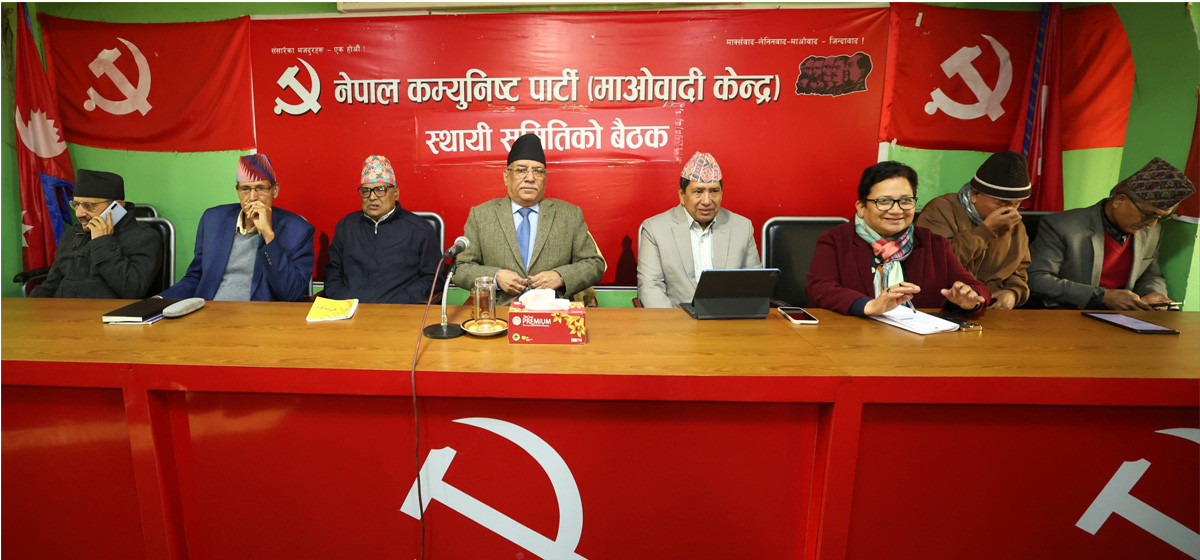

Pokhara, 4 August । A significant internal rift has emerged within the CPN (Maoist Center) as Deputy General Secretary Janardan Sharma has openly challenged the leadership of Party Chairman Pushpa Kamal Dahal ‘Prachanda’ during a recent standing committee meeting. The long-awaited meeting, convened after a year, has been dominated by a debate over the party’s direction and leadership, with Sharma proposing a special convention and demanding self-criticism from the top brass. He has criticized the leadership for ideological deviations, organizational chaos, and the party’s continuous decline in electoral support since its peak in 2064 BS.
Sharma’s dissent came to the fore as he accused the leadership of neglecting decisions made in previous meetings and failing to address the party’s fundamental issues. However, his strong stance appears to be isolated within the committee, as a majority of the 37 members present have sided with Prachanda. According to Party Vice-Chairman and spokesperson Agni Prasad Sapkota, a few members, including secretaries Ram Karki, Parshuram Tamang, Anjana Bisankhe and Tanka Rai, supported the idea of Prachanda stepping down, but the overwhelming consensus was that there is no alternative to his leadership. Sapkota also stated that the dissenting voices are not considered significant by the party’s establishment.
Despite Prachanda’s public calls for “a new kind of revolution and party unity” at an event at the party office, the mood inside the standing committee meeting was reportedly confrontational. Another Deputy General Secretary, Shakti Basnet, accused Sharma of being “operated by external forces.” Sharma, however, has stood his ground, stating he is ready for self-criticism but on the condition that Prachanda also takes responsibility for the problems arising under his leadership. He further argued that a special convention is essential to foster competition and public accountability within the party.
Sharma’s critique is not merely personal; it addresses the core issues plaguing the party, such as ideological ambiguity, organizational instability, and the decline in public trust. He has specifically pointed to the loss of 3.1 million votes since the 2064 BS elections, attributing it to a lack of commitment to the working class and the party’s failure to own the issues of federalism and identity. The ongoing meeting, instead of focusing on these critical agendas, has become a platform for internal conflict, raising serious questions about the future of the Maoist Center.