







End of an Era in Jajarkot as Shakti Bahadur Basnet Suffers Defeat
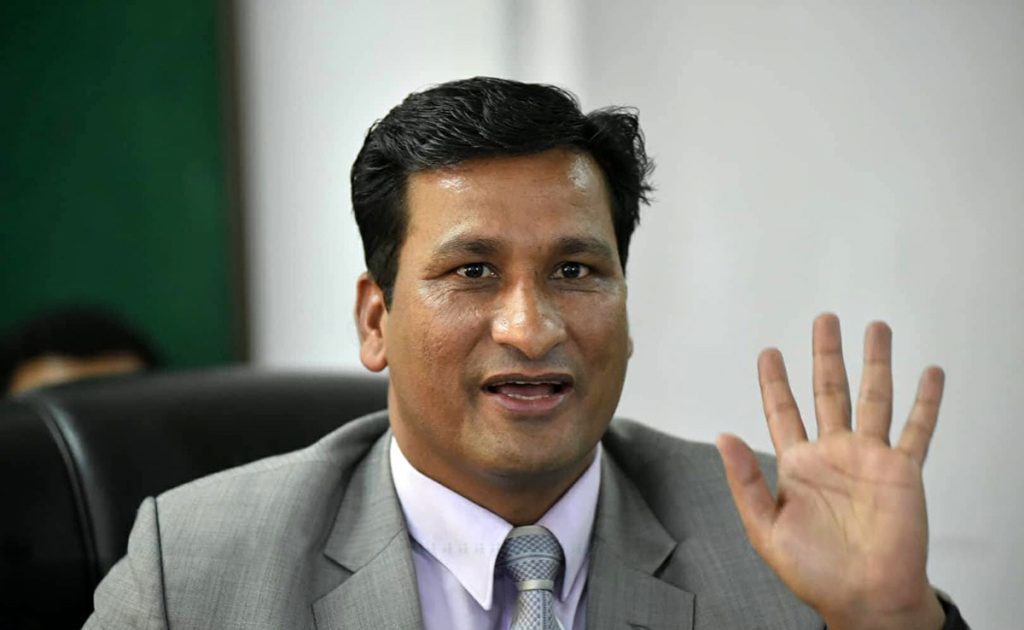
Pokhara, 7 March| The political landscape of Jajarkot has witnessed a seismic shift as the heavyweight leader of the CPN (Maoist Centre), Shakti Bahadur Basnet, failed to secure his fourth consecutive term in the House of Representatives. In a dramatic turn of events during the 2082 election cycle, Basnet, who had previously maintained an unbreakable winning streak, was defeated by Khadka Bahadur Budha of the Nepali Congress. The final vote tally revealed a significant gap, with Budha securing 20,142 votes while Basnet managed to gather only 17,404 votes. This unexpected result marks the conclusion of a long-standing parliamentary legacy that Basnet had carefully built over decades of political engagement and executive service. The loss is being viewed not just as a personal defeat for Basnet but as a broader reflection of the shifting organizational dynamics within the district, where the Maoist Centre’s grip appears to have loosened significantly compared to its rivals.
Basnet’s political journey is deeply intertwined with the history of the Maoist movement in Nepal. Having served as a close confidant and a key member of the secretariat for Chairman Pushpa Kamal Dahal ‘Prachanda’, he was considered a pillar of the party’s establishment. His transition from a revolutionary combatant during the armed struggle to a sophisticated parliamentarian was once seen as a success story of Nepal’s peace process. Holding a Master’s degree in Political Science, Basnet began his formal political life with the CPN (Unity Centre) and was active during the 1990 People’s Movement. By 1992, he had become the District Secretary of Jajarkot and later led the rural class struggle in the western region. Throughout the conflict years, he climbed the party hierarchy, serving as a politburo member and a division commissar of the People’s Liberation Army, particularly overseeing the Bheri-Karnali and Tharuwan regions. His influence was so profound that he was often seen as the face of the Maoist movement in the mid-western hills.
After the peace process, Basnet successfully navigated the waters of parliamentary politics, entering the first Constituent Assembly in 2008 through the proportional representation system. He later served as the Minister for Health and Population in 2011. His electoral prowess was truly showcased in the 2013 second Constituent Assembly elections, where he was directly elected from Jajarkot-1, subsequently becoming the Home Minister. He continued his winning streak in the 2017 general elections and served as the Minister for Forest and Environment. By the 2022 elections, he had completed a ‘hat-trick’ of victories with the support of the then-ruling coalition, defeating his UML rival by over 9,000 votes. However, the current 2082 election presented a vastly different reality. The absence of a strong pre-poll alliance meant Basnet had to rely solely on his party’s strength, which had already shown signs of fatigue.
The warning signs were evident during the local level elections, where the Maoist Centre won only one out of seven local units in Jajarkot, while the Nepali Congress and CPN-UML secured three each. This local-level data suggested a decline in Basnet’s grassroots organizational base. Additionally, the ‘anti-incumbency’ factor played a heavy role, as voters grew weary of the same leadership representing them for multiple terms without delivering the anticipated radical changes. While the CPN-UML fielded Dambar Bahadur Singh to reclaim their lost ground, the real challenge came from Khadka Bahadur Budha of the Congress, who successfully tapped into the desire for change. The broader national trend, as shown in the 2082 live results, indicates a surge for newer forces like the Rastriya Swatantra Party (RSP), which currently leads with 72 seats, while traditional powerhouses are struggling to maintain their strongholds. Basnet’s defeat is a poignant reminder that even the most established political legacies can crumble when they lose touch with local shifts and the evolving aspirations of a younger electorate that seeks fresh faces in the halls of power.