
















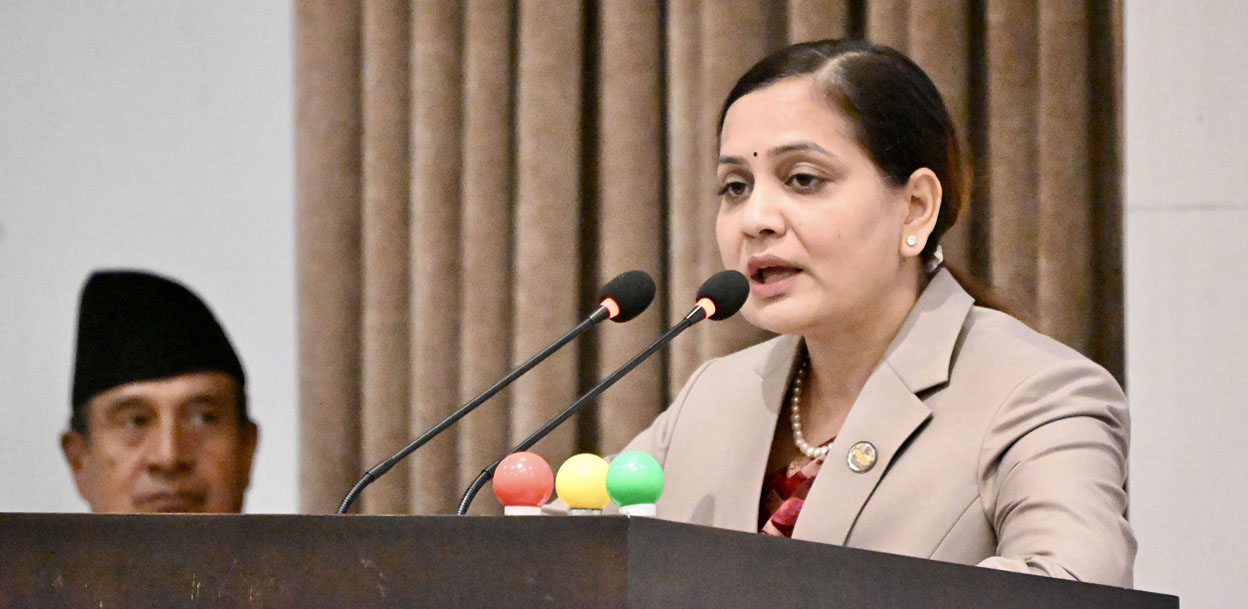

Pokhara, 24 September | The government has moved to strengthen legal protection for health workers and health institutions by proposing tougher penalties for physical assaults, vandalism, arson, intimidation and other forms of violence in healthcare settings. Health and Food Safety Minister Nisha Mehta has registered a bill in the House of Representatives seeking amendments to the Health Workers and Health Institutions Security Act, 2066. The proposed legislation introduces stricter imprisonment and financial penalties for violence against health workers, employees of health institutions and students undergoing training.
Under the proposed amendment, anyone who assaults, physically attacks or causes bodily injury to a health worker, an employee of a health institution or a student, or displays criminal force while carrying a weapon, could face imprisonment of up to five years and a fine of up to Rs 500,000. The proposal is intended to make punishment more stringent than under the existing framework, where offenders can in certain cases face a fine, imprisonment or both. The proposed changes would reduce the possibility of an offender escaping with only a financial penalty after an assault.
The bill also proposes two to five years of imprisonment and a fine ranging from Rs 200,000 to Rs 500,000 for arson at a health institution. A person who vandalizes a health institution, causes damage by other means, or assaults a health worker or employee and causes physical injury could face up to three years in prison and a fine of up to Rs 300,000. Similarly, individuals involved in locking or surrounding a health institution, obstructing patient treatment, verbally abusing or behaving indecently toward health workers and employees, or encouraging others to engage in such activities could face up to one year in prison and a fine of up to Rs 100,000.
The proposed amendment comes amid longstanding concerns among doctors and other healthcare professionals over violence in hospitals and the lack of adequate protection at workplaces. Professional organizations representing doctors, nurses and other health workers have repeatedly called for stronger legal provisions, including the long-standing demand for a “jail without bail” approach against those who attack health workers. Nepal Medical Association President Dr Badri Rijal has said the proposed legislation could help create an environment in which health workers can provide treatment without working under constant fear of physical attacks.
The push for stronger legislation has a longer history. The government enacted the Health Workers and Health Institutions Security Act in 2066 BS, followed by regulations in 2069 BS. According to former Nepal Medical Association president Dr Lochan Karki, the original penalties were relatively weak and did not create sufficient deterrence against violence. He said incidents of assault and mistreatment of health workers increased after the 2062/63 political movement, leading the medical community to press the government for dedicated legal protection.
A series of incidents subsequently strengthened calls for tougher enforcement. In 2073 BS, an incident involving mistreatment of health workers at a primary health centre in Charikot intensified demands for accused individuals to be arrested and not easily released on bail. The “jail without bail” demand then became a prominent issue among medical professionals. In 2074 BS, health workers also launched nationwide protests after the government made a decision that was understood as potentially placing responsibility on doctors when patients died during treatment. The protests affected health services across the country, and the government eventually agreed not to implement the disputed decision.
A committee led by then-chief specialist at the Ministry of Health, Dr Pushpa Chaudhary, was later formed to prepare amendments to the security law. The amendment draft went through the Ministry of Health and Ministry of Law before reaching the Cabinet. Although the revised bill reached a parliamentary committee, the process was halted following the dissolution of the House of Representatives.
The issue returned to national attention during the COVID-19 pandemic following an attack on health workers at Bheri Hospital in Banke. Health workers treating COVID-19 patients were reportedly forced to take extreme measures to protect themselves during the incident, with some jumping from an upper floor and others hiding in bathrooms. The incident triggered renewed concern over the safety of healthcare professionals working on the frontline and prompted medical organizations to intensify pressure for stronger legal protection.
The government subsequently introduced amendments through ordinances, strengthening some provisions relating to attacks on health workers and health institutions. Later measures also addressed offences such as vandalism and arson at health institutions and attacks against personnel involved in patient treatment. Dr Karki said the revised framework helped reduce situations in which accused individuals could be released through informal settlements after being arrested. According to him, cases could instead proceed through the government attorney’s office and the courts.
At the same time, health-sector representatives have emphasized that stronger protection for health workers should not prevent patients from seeking legal remedies when negligence occurs. They point to existing mechanisms through the Nepal Medical Council, courts and consumer courts for professional disciplinary action, legal proceedings and compensation claims. Dr Rijal has argued that if negligence by a health professional is established, the responsible person should face action under the law, but allegations of negligence should not become a justification for physical attacks or destruction of health facilities.
The proposed bill also seeks to broaden the legal definition of health workers by including people undergoing internships. In addition, the definition of security would be expanded beyond physical protection to include economic security. Health-sector stakeholders have stressed that legislation alone will not eliminate violence inside hospitals. Alongside stronger enforcement, they say public awareness, accurate information about medical treatment and better understanding of healthcare procedures are also necessary. The proposed amendments therefore represent another step in the broader effort to strengthen workplace security for health workers while maintaining legal avenues for patients and families to raise legitimate concerns about treatment and professional conduct.