














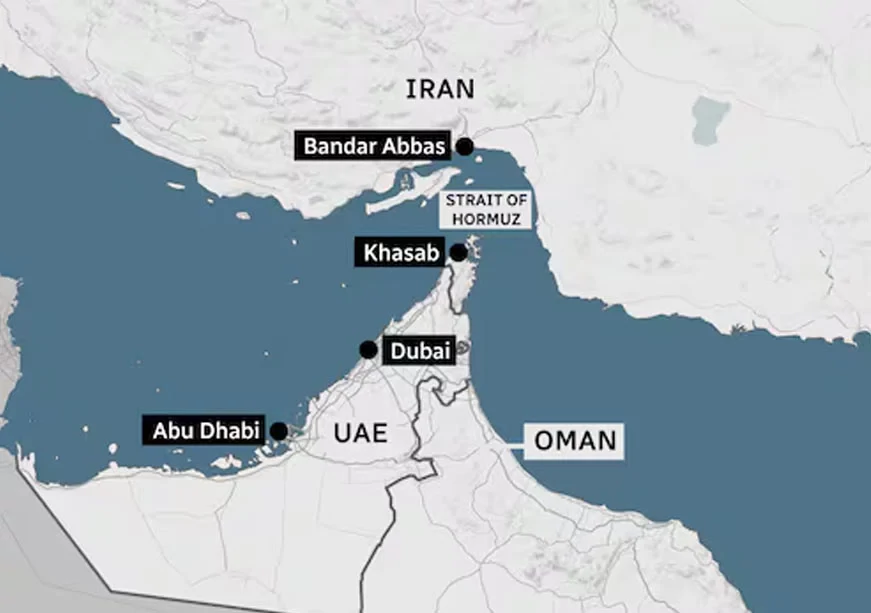

Pokhara, 16 April | The Strait of Hormuz, a narrow yet critically significant maritime passage connecting the Persian Gulf to the global ocean, has increasingly become a focal point of geopolitical confrontation involving the United States, Iran, and China. As one of the world’s most vital energy chokepoints, through which nearly one-fifth of global oil supply transits daily, any disruption in this region carries far-reaching implications for global energy markets, economic stability, and international relations.
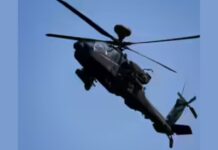
In recent months, the United States has significantly intensified its “maximum pressure” strategy against Iran, aiming to curb Tehran’s oil exports and weaken its economic foundation. To enforce this policy, Washington has expanded its military footprint in the region, deploying aircraft carrier strike groups, guided missile destroyers, submarines, and advanced surveillance systems. The primary objective of this deployment is to monitor maritime traffic, intercept vessels suspected of transporting Iranian oil, and, when necessary, enforce maritime restrictions.
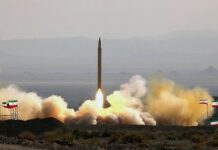
However, despite its overwhelming military superiority, the United States has encountered considerable challenges in executing its strategy. Iran has deliberately avoided conventional naval confrontation and instead adopted an asymmetric warfare approach. By deploying fleets of small, high-speed missile boats capable of executing coordinated swarm attacks, Iran has created a tactical environment that complicates traditional naval defense mechanisms. These vessels, often referred to as “Red Bees,” are designed to exploit speed, maneuverability, and numbers to overwhelm larger and more technologically advanced warships.
The threat is further compounded by Iran’s strategic use of naval mines. Unlike traditional mines, modern smart mines are equipped with advanced sensors and programming capabilities that allow them to remain dormant until specific conditions are met. Given the narrow and shallow characteristics of the Strait of Hormuz, even a limited number of such mines could significantly disrupt maritime traffic and global oil supply chains.
China’s involvement has added another dimension to the evolving crisis. Despite US sanctions, Chinese oil tankers have continued to transport Iranian crude, signaling Beijing’s firm stance on safeguarding its energy interests. This defiance has not only weakened the effectiveness of US sanctions but also underscored the shifting balance of power in global geopolitics. China’s actions reflect a broader trend toward a multipolar world, where emerging powers are increasingly willing to challenge established norms and restrictions.
Iran, anticipating prolonged economic pressure, has taken proactive measures to mitigate the impact of sanctions. By increasing oil exports prior to the escalation and maintaining substantial floating storage reserves, Tehran has created a buffer that allows it to sustain revenue flows even under restrictive conditions. Additionally, the use of alternative payment mechanisms, including transactions in Chinese yuan and digital currencies, has enabled Iran to partially circumvent the global financial system dominated by the US dollar.
The economic implications of the crisis are profound. A sustained disruption in the Strait of Hormuz could lead to a sharp increase in global oil prices, potentially triggering inflation, slowing economic growth, and exacerbating global inequality. International financial institutions have already warned of declining growth projections and the risk of millions of people being pushed into poverty as energy costs rise.
At the same time, the crisis is influencing global diplomatic alignments. Countries heavily dependent on energy imports, including India and several European nations, are closely monitoring developments and exploring alternative supply routes. Regional actors in the Middle East are also adjusting their strategies, balancing security concerns with economic interests.
Ultimately, the situation in the Strait of Hormuz represents more than a localized geopolitical dispute. It reflects a broader transformation in the global order, characterized by the gradual shift from a unipolar system dominated by a single superpower to a more complex multipolar structure. The interplay between military capability, economic resilience, and strategic alliances will determine the trajectory of this crisis.
As tensions continue to rise, the Strait of Hormuz remains a critical flashpoint with the potential to reshape global energy dynamics, economic stability, and geopolitical relations for years to come.