











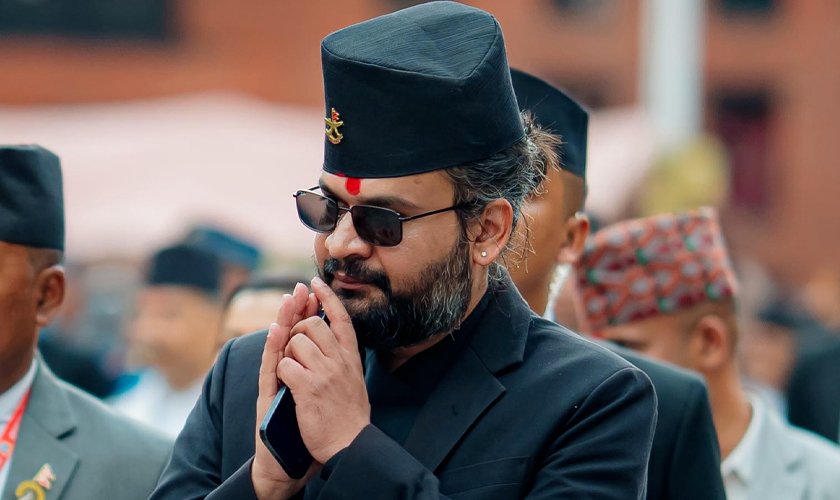

Pokhara, 28 April | Preparations for Nepal Prime Minister Balen Shah’s official visit to India have formally begun, marking what is widely seen as the first major diplomatic test for the newly formed government. With nearly a month having passed since the formation of the government without any high-level foreign visit, the decision to prioritize India underscores the enduring strategic importance of Nepal-India relations. The upcoming visit is expected not only to strengthen bilateral ties but also to define the broader direction of Nepal’s foreign policy in an increasingly complex geopolitical environment.
According to government sources, a multi-layered diplomatic process has already been set in motion to finalize the date and agenda of the visit. The initial phase will involve foreign secretary-level talks in Kathmandu, followed by ministerial-level discussions in New Delhi. Indian Foreign Secretary Vikram Misri is scheduled to visit Kathmandu on April 28 for a two-day official trip, which is being considered a crucial step in finalizing the prime minister’s visit. During his stay, Misri is expected to hold meetings with key Nepali ministers, including those responsible for finance, foreign affairs, energy, and infrastructure, as well as conduct formal discussions with his Nepali counterpart, Foreign Secretary Amrit Bahadur Rai.
These discussions are expected to focus on key areas such as trade, transit, energy cooperation, water resources management, infrastructure development, and regional connectivity. Particular attention is likely to be given to electricity trade, cross-border transmission lines, and investment opportunities. Following the secretary-level talks, Nepal’s Foreign Minister Shishir Khanal is expected to travel to India for ministerial-level negotiations. It is anticipated that the date and detailed agenda of Prime Minister Shah’s visit will be finalized during this stage.
Indian Prime Minister Narendra Modi had extended an invitation to Balen Shah shortly after the formation of the new government, both through a telephone conversation and a formal message. The Government of Nepal has accepted the invitation in principle, and officials indicate that the visit will take place once all necessary preparations are complete. Compared to past instances where Nepali prime ministers had to wait extended periods for official invitations, the swift progression of this process reflects a notable shift in diplomatic engagement between the two countries.
Historically, Nepal’s prime ministers have often prioritized India as their first foreign destination, a practice deeply rooted in political and strategic considerations. This pattern has sometimes been interpreted as an effort to secure political stability at home by maintaining favorable relations with New Delhi. Analysts have pointed out that in the past, weak coalition governments and internal political instability limited Nepal’s ability to negotiate assertively with India, often resulting in agreements perceived as disproportionately beneficial to the latter.
In contrast, Prime Minister Balen Shah leads a government with strong public support and a near two-thirds majority, providing him with a comparatively stronger mandate. This political strength is expected to translate into greater confidence in diplomatic engagements. Observers believe that Shah has an opportunity to redefine Nepal’s approach to India by prioritizing national interests while maintaining a balanced and constructive relationship.
However, the challenges ahead remain significant. Key issues such as border disputes, trade imbalances, transit dependency, and energy cooperation require careful handling. The border issue, particularly concerning Kalapani, Lipulekh, and Limpiyadhura, continues to be a sensitive and unresolved matter. Although Nepal has officially updated its political map to include these areas, the practical assertion of sovereignty remains a complex challenge. Recent developments, including trade agreements involving India and China in the region, have further complicated the situation.
Another critical aspect of Nepal-India relations is the persistent gap between agreements and their implementation. Over the years, numerous agreements have been signed in sectors such as energy, infrastructure, and connectivity, yet many remain stalled or incomplete. Analysts emphasize that the success of the upcoming visit will depend less on the signing of new agreements and more on the effective implementation of existing commitments.
The broader geopolitical context also adds to the significance of the visit. Nepal has increasingly become a focal point of interest for major global powers, including the United States and China. Recent visits by high-level officials from both countries indicate growing international attention toward Nepal’s political and strategic direction. This heightened interest presents both opportunities and challenges, as Nepal must carefully navigate competing influences while safeguarding its sovereignty and independence.
For India, Nepal is not just a neighboring country but a strategically important partner, particularly in the context of regional security and competition with China. The emergence of Balen Shah as a political leader outside traditional party structures has added a new dimension to bilateral relations. India appears keen to establish strong ties early on, reflecting a pragmatic approach to diplomacy.
China, meanwhile, has also been actively engaging with Nepal, focusing on infrastructure investment and regional connectivity initiatives. Its long-term strategy involves enhancing Nepal’s role as a transit and connectivity hub. The United States, on the other hand, has shown increasing interest in Nepal within the framework of its Indo-Pacific strategy. The convergence of these interests places Nepal in a delicate position, requiring a carefully balanced foreign policy.
Prime Minister Shah’s proposed visit to India must therefore be understood within this broader context. It represents more than a routine diplomatic engagement; it is a critical moment that will test Nepal’s ability to articulate its priorities, maintain strategic balance, and achieve tangible outcomes. The success of the visit will depend on the clarity of Nepal’s agenda, the level of preparation, and the ability to engage in constructive yet assertive dialogue.
Ultimately, the key question is not what India, China, or the United States seek from Nepal, but how Nepal defines and pursues its own national interests. The upcoming visit provides an opportunity to set a new precedent in Nepal’s foreign policy, one that emphasizes balance, sovereignty, and mutual benefit. Whether this opportunity will be effectively utilized remains to be seen, but its significance is undeniable.