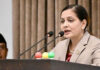






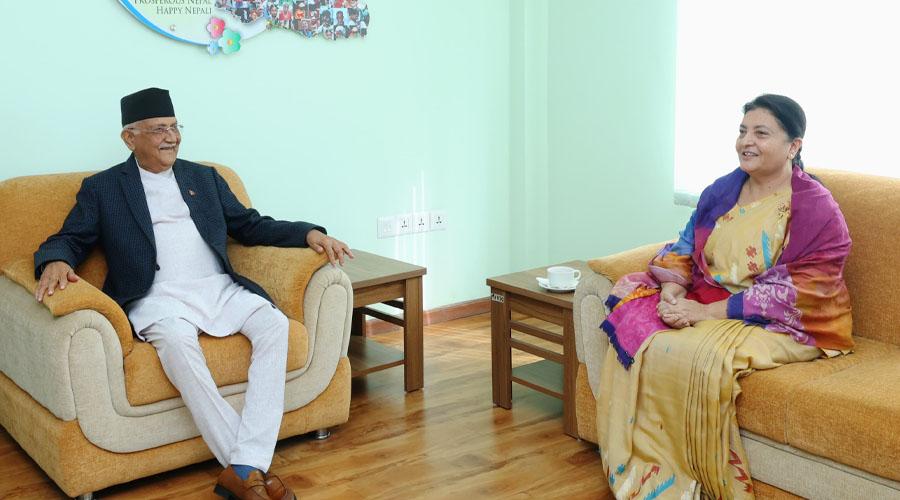

Pokhara, 24 September | Former President Bidhya Devi Bhandari has been appointed as a senior leader of the CPN-UML, formally marking her return to an active leadership role in party politics. The decision was endorsed by the party’s Central Committee at its third meeting held at Rambagh Mahal in Bhanimandal, Lalitpur. The meeting had been underway since September 5. Earlier on Thursday, the UML Secretariat had proposed Bhandari for the senior leadership position, with the proposal subsequently presented to and approved by the Central Committee.
Bhandari is a former vice-chair of the UML and served as Nepal’s second president. After being elected president in 2015, she left active party politics in accordance with the responsibilities of the presidential office. Following her departure from the presidency, however, she publicly expressed her intention to continue her political journey within the UML. Her return to active politics and the renewal of her party membership became a subject of internal discussion within the party before the latest decision.
The issue of Bhandari’s party membership had remained politically significant within the UML. The party had previously kept her membership on hold amid debate over her possible return to active politics. Later, the party leadership decided to release the membership from the hold and renew her previous membership. The development paved the way for her formal re-entry into the party’s political structure.
The latest decision gives Bhandari the second position in the party’s leadership hierarchy, behind Chairman KP Sharma Oli. The decision is notable because the current UML statute does not contain a regular provision for the position of senior leader. Reports indicate that the position had been removed through the party’s recent statute convention. Despite that, the Central Committee has now assigned Bhandari the senior leadership role as part of the party’s current organizational arrangement.
Bhandari has a long political history within the communist movement in Nepal. She became involved in student politics before joining the organizational structure of the then Communist Party of Nepal (Marxist-Leninist). She later became closely associated with the political career of Madan Bhandari, whom she married. Following Madan Bhandari’s death in 1993, she became more active in party politics and subsequently held several organizational and political responsibilities within the UML.
Her political career included ministerial responsibilities in the science and technology, population and environment, and defense portfolios. She later rose to the position of UML vice-chair before being elected president of Nepal in 2015. She served as head of state for more than seven years before leaving office. Her return to party politics has therefore brought her back into an organization where she had previously held one of the highest leadership positions.
Bhandari’s relationship with UML Chairman KP Sharma Oli had also been the subject of internal and public discussion during the period surrounding her political return. Questions over her membership and possible role in the party had generated differing views among UML leaders. Some leaders had expressed reservations about keeping her membership on hold, while Bhandari had maintained that she had remained politically connected to the UML and wanted to continue her political journey within the party.
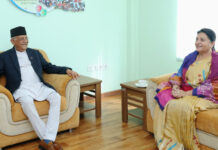
Recent interactions between Bhandari and the UML leadership preceded the latest organizational decision. Reports said that communication between Bhandari and senior UML leaders had increased, creating circumstances for determining her formal role. The Secretariat’s proposal and its subsequent approval by the Central Committee have now settled that immediate organizational question.
The Central Committee meeting also approved Chairman Oli’s political report and made several organizational decisions, including appointments to the Standing Committee and Central Committee. The meeting appointed several senior figures to the Standing Committee and nominated additional Central Committee members. Bhandari’s appointment as senior leader was made alongside these broader organizational decisions.
Bhandari’s return places a former head of state back into the active leadership structure of one of Nepal’s major political parties. Her new role connects her political experience at the national and constitutional levels with the organizational responsibilities of the UML. The decision also gives her a formally recognized position in the party hierarchy after a period marked by debate over her membership and political future. Her activities and responsibilities in the new position are expected to become part of the UML’s organizational and political discussions as the party moves forward.