








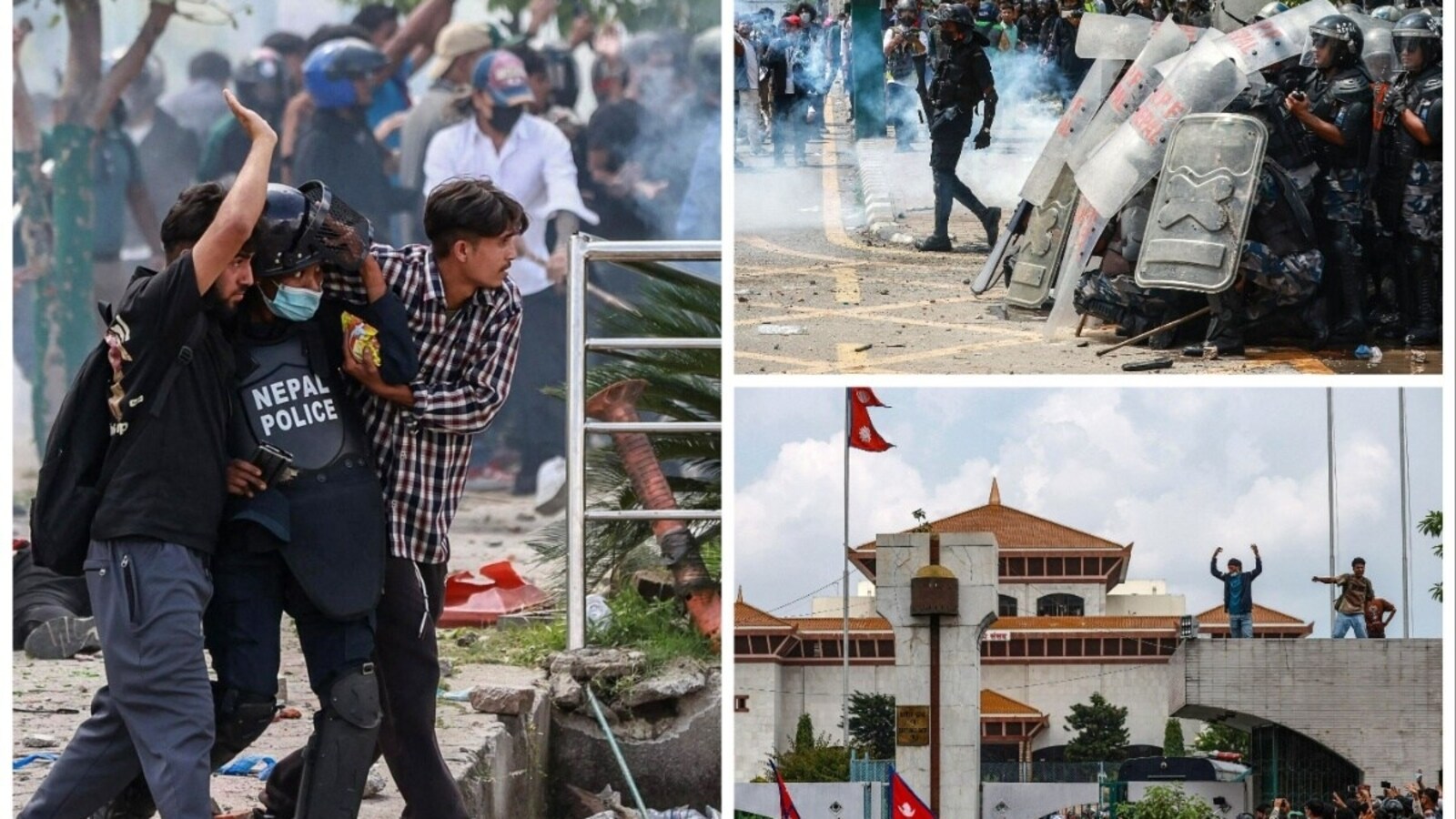

Pokhara, 9 September | Following the tragic events of Monday, where a dozen young individuals shed their blood on the streets, serious questions have been raised about the legitimacy of the current government. The state’s suppression of the Gen-Z youth protest is described as devastating and tragic, painting a grim picture of Nepal’s crisis-ridden state. The death of 19 unarmed civilians from police gunfire has dealt a severe blow to the democratic system. To understand this crisis, two key aspects related to the event must be analyzed. First, the repressive behavior of the security forces. While protests are a normal part of a democratic process, the indiscriminate firing and killing of people on the grounds that protesters turned aggressive cannot be a state security strategy. The behavior exhibited by the police in the recent Gen-Z protests and the earlier royalist movements is disturbingly similar to that of criminals for hire.
Political parties are primarily responsible for the police’s unprofessional conduct. Instead of making the police force professional, they have used it for their own gain and have been exploiting it for their salutes, servitude, and funeral processions. The corruption in the appointment of police leadership is just the tip of the iceberg; the core issue is the political parties’ use of the police force to expand their power and authority rather than to protect the general public. This has eroded professionalism within the police organization, making it accountable to political leaders instead of the public. If the government had analyzed and acted upon the losses during the royalist protests, Monday’s violence could have been avoided.
Secondly, the foolish decision to shut down all social media platforms at once. Social media is an integral part of people’s daily lives and is not just a means of entertainment. While regulation is necessary, there is a specific method for it. The sudden shutdown of all platforms not only created chaos but also made daily life miserable, causing significant losses to ordinary citizens. This act is a blatant display of administrative arrogance, showing how disconnected the leaders are from the reality of the public’s daily life.
The Gen-Z movement, regardless of who organized it, has the sympathy of the majority of Nepalis. Any attempt by the government to defame or use its power to suppress these individuals will be a suicidal move. It will neither extend the government’s lifespan nor reduce public discontent. The current state of Nepal is fragile, and the longer it takes to accept this reality, the deeper the crisis will become. The Nepali economy is in a dire state, the government’s role in delivering basic services has declined, and the condition of public universities and hospitals clearly shows a continuous degradation of education and health security.
The lack of fundamental change in Nepal’s state structure is primarily due to its deeply entrenched regressive mindset. The ruling class’s accountability to the public is zero, and its arrogance has grown in equal measure. This is rooted in their casteist and misogynistic arrogance. The leadership of political parties is inspired by a caste purity ideology, where only the views of certain people are considered valid. The bureaucracy is also a group of purists filled with antiquated thinking and high-caste arrogance, with their primary interest lying not in effective service delivery but in commissions and contracts.
To change this, it is crucial to recognize and work towards ending the casteist mindset. This is the truth that the Gen-Z movement has brought to light. Suppressing this movement will be a suicidal step for the government. Believing that leaders like K.P. Oli, Deuba, or Prachanda can change the face of Nepal is as foolish as believing that expired medicine can cure a disease. In the context of Monday’s events, there is only one question for Prime Minister Oli: ‘Does it suit you to sit on that chair with the blood of a dozen young people on the streets?’ This movement has ended the legitimacy of the current government, and “Your time is up!”