















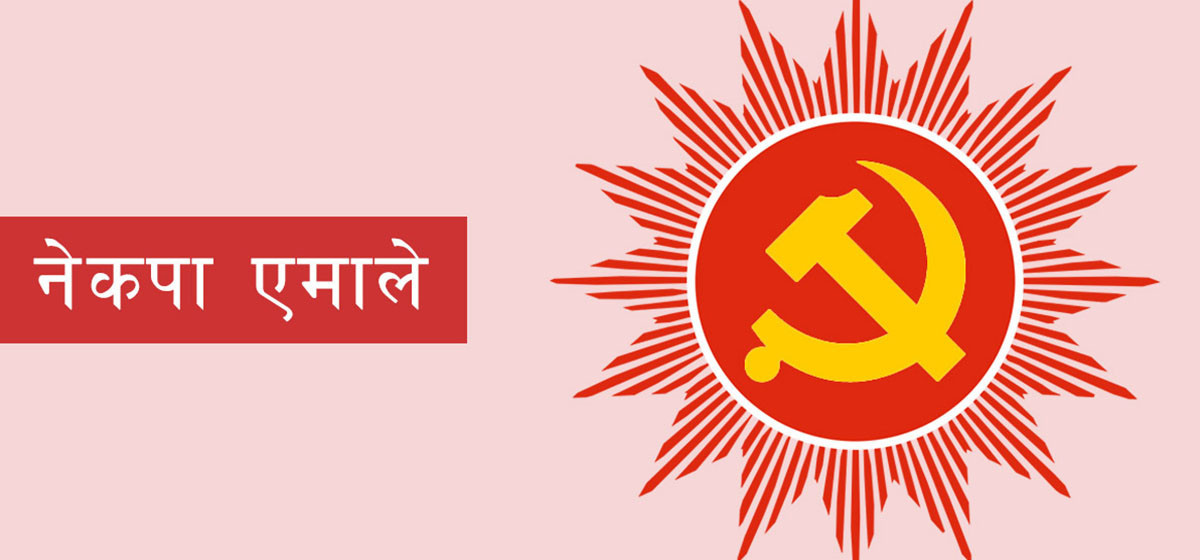

Pokhara, 28 January | As the House of Representatives election scheduled for March 5 (Phagun 21) approaches, political activities in Pyuthan have reached a fever pitch. With over 165,000 registered voters, this single-constituency district is witnessing a high-stakes battle between veteran politicians, intellectual heavyweights, and energetic newcomers. The electoral landscape of Pyuthan has become particularly intriguing this time, as five major political parties have deployed aggressive campaigning strategies. Surya Thapa of the CPN-UML is running for a second consecutive term, while the Nepali Congress has fielded Prof. Dr. Govind Raj Pokhrel. Additionally, the candidacies of Krishna Dhwoj Khadka from the CPN, Tilak Bahadur GC from Rastriya Janamorcha, and economist Sushant Baidik from the Rastriya Swatantra Party (RSP) have turned Pyuthan into a national focal point of political interest.
Incumbent lawmaker Surya Thapa, who secured victory in the 2079 BS elections with 41,118 votes, faces the significant challenge of defending his previous triumph. Thapa, a journalist-turned-politician and a central committee member of the UML, had previously defeated Durga Paudel of Rastriya Janamorcha by a margin of over five thousand votes. However, his recent role as the chairman of the parliamentary inquiry committee into the cooperative fraud case—involving RSP Chairman Rabi Lamichhane—has made him a target of intense criticism from RSP supporters. On the other hand, Nepali Congress candidate Dr. Govind Raj Pokhrel brings a formidable academic and administrative background to the race. As a former Vice-Chairman of the National Planning Commission and former CEO of the National Reconstruction Authority, Pokhrel’s scholarly image and the current internal unity within the local Congress party present a serious threat to the UML’s long-standing dominance in the region.
The entry of Krishna Dhwoj Khadka and Sushant Baidik further complicates the electoral arithmetic. Khadka is a seasoned leader and former Finance Minister of Lumbini Province, while Baidik is a London School of Economics graduate who recently joined the RSP. Although the 2079 BS proportional representation data showed the CPN-UML leading significantly with 33,804 votes—nearly double that of the Nepali Congress—analysts suggest that shifting voter sentiments and the emergence of new political forces could disrupt traditional patterns. While the UML remains organizationally strong, the rise of the RSP and the presence of influential local figures like Khadka could siphon off critical votes. As the candidates intensify their outreach, the ultimate decision of the Pyuthan electorate will depend on whether they prioritize established political legacies or opt for fresh, policy-driven alternatives.