














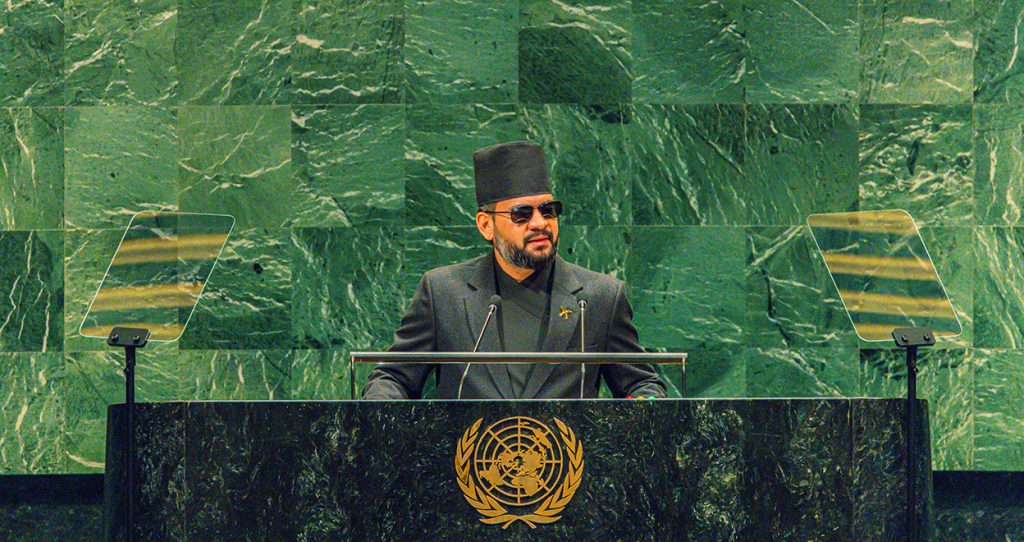

Pokhara, 27 September | Prime Minister Balendra “Balen” Shah has returned to Nepal after participating in the 81st session of the United Nations General Assembly in New York. Shah left Nepal on Tuesday evening to lead the Nepali delegation to the high-level UN gathering and returned home on Saturday after completing his scheduled programme. During the visit, he addressed the General Assembly and placed Nepal’s growing vulnerability to climate-related disasters at the centre of his international message.
The Ministry of Foreign Affairs held a press conference at Tribhuvan International Airport following the Prime Minister’s return to brief journalists about the visit. Acting Foreign Secretary Ganesh Prasad Dhakal said Nepal had participated actively in the General Assembly and related programmes. According to the ministry, Nepal’s participation helped highlight the country’s priorities and concerns on the international stage, particularly its exposure to climate change and the increasing risks faced by Himalayan communities.
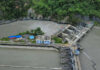
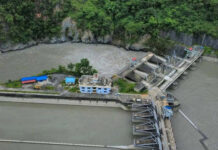
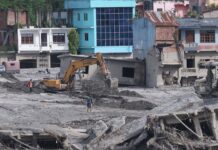
Addressing the General Assembly on September 24, Shah presented the recent Bhotekoshi-Trishuli floods as a warning to the international community about the consequences of the climate crisis. He argued that Nepal contributes less than 0.1 percent of global greenhouse gas emissions but is experiencing severe consequences from a changing climate. He described climate change as more than an environmental issue for Nepal, saying it has become a humanitarian and development emergency that threatens infrastructure, livelihoods and years of development progress.
Shah proposed establishing a “Himalayan Climate Resilience Mechanism” involving Nepal, India and China to address growing climate-related risks in the Himalayan region. He called for greater cooperation in sharing satellite data and technical expertise, monitoring potentially dangerous glacial lakes, strengthening early-warning systems and coordinating cross-border assistance during disasters. He also highlighted the risks associated with melting glaciers and permafrost, unstable mountain slopes, floods and landslides, arguing that climate-related hazards do not stop at national borders.
The Prime Minister also raised the issue of climate justice, calling for greater responsibility from countries that have historically contributed more to global greenhouse gas emissions and have greater capacity to respond to the crisis. He urged the international community to make climate finance more accessible, including through grant-based resources for countries facing severe climate impacts. Shah also argued that the voices of Himalayan communities, landlocked and least-developed countries, small island nations and future generations should receive greater consideration in international climate decision-making.
During his visit, Shah also held meetings with United Nations Secretary-General António Guterres and representatives of various countries and international organisations. According to reports, the discussions included Nepal’s climate vulnerabilities and the consequences of the recent Bhotekoshi disaster. Guterres expressed concern over the loss of life and property caused by the floods and reiterated the United Nations’ support for Nepal in addressing the climate crisis.
The visit therefore focused substantially on Nepal’s climate vulnerability, Himalayan disaster risks and the need for stronger international cooperation. Nepal’s government has presented the Prime Minister’s participation as an opportunity to draw greater international attention to the disproportionate climate impacts faced by the country despite its relatively small contribution to global emissions. Shah’s return marks the completion of his participation in the 81st UN General Assembly and related high-level engagements in New York