










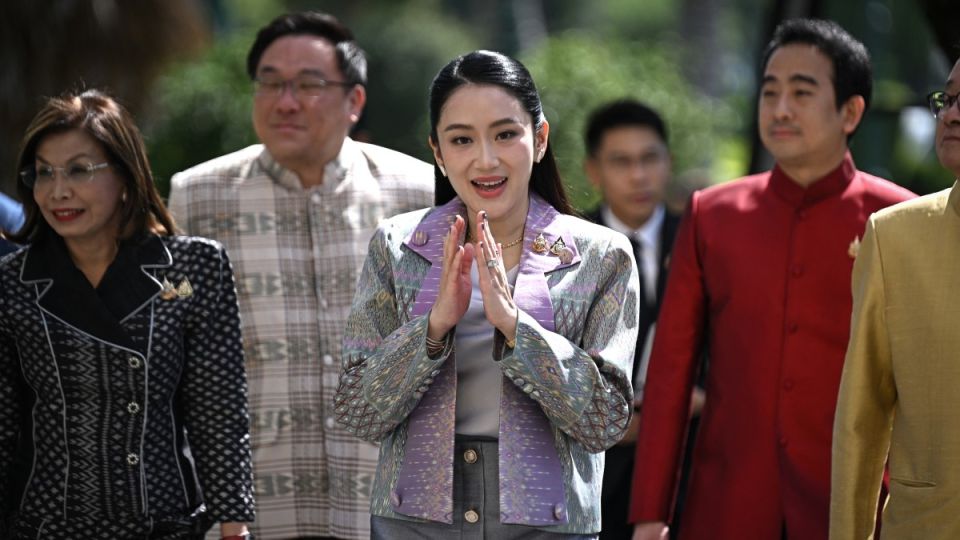

Pokhara, 19 June — Thailand’s political climate has intensified following the release of a controversial audio clip, prompting opposition leader Natthaphong Ruengpanyawut to call on Prime Minister Paetongtarn Shinawatra to dissolve the House of Representatives. The leaked phone conversation between Prime Minister Paetongtarn and Cambodian Senate President Hun Sen has stirred political backlash and raised concerns over the prime minister’s diplomatic conduct.
In the recording, Hun Sen — who is also the father of current Cambodian Prime Minister Hun Manet — publicized a private discussion in which Paetongtarn referred to the commander of Thailand’s Second Army Area as “the opposite side.” She further requested Hun Sen to disregard the military commander’s actions following the border skirmish on May 28. The Second Army Area had earlier suggested closing border crossings with Cambodia in response to the incident, though the Thai government instead opted to reduce border crossing hours.
Opposition leader Natthaphong condemned the prime minister’s approach, stating it lacked the decorum expected of a national leader. He emphasized that Paetongtarn, while free to use informal communication channels, should have exercised greater political maturity and respect for national institutions. Referring to the Thai army as an adversarial party, he added, undermines both the military’s role and public confidence in the government’s leadership.
Natthaphong further argued that the prime minister missed a critical opportunity to reinforce diplomatic mechanisms to resolve border disputes, instead of risking international escalation. He warned that continued inaction could destabilize democratic processes, urging the prime minister to take immediate steps to de-escalate tensions and reinforce civilian oversight over military communications.
“If she fails to restore public trust and manage the situation diplomatically,” Natthaphong said, “she must dissolve the House and return the mandate to the people.”
As tensions remain high, calls for accountability are growing louder, placing Paetongtarn under mounting pressure to address both the diplomatic fallout and the internal political ramifications of the leaked conversation.