







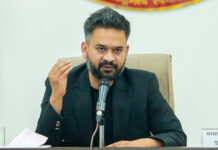



Pokhara, 26 December| The political landscape of Nepal is witnessing a significant shift as Kathmandu Metropolitan City Mayor Balen Shah intensifies his political engagements, signaling a potential new polarization. Following a period of relative silence after the Gen Z movement, Shah’s recent six-hour dialogue with the recently released Chairman of the Rastriya Swatantra Party (RSP), Rabi Lamichhane, has sent ripples through the political establishment. On Wednesday and Thursday, Shah continued a marathon of meetings with Gen Z leaders, youth activists engaged in alternative politics, and senior political figures. A key gathering in Jwagal, Lalitpur, saw the participation of Lamichhane, former Prime Minister Dr. Baburam Bhattarai, and various central leaders, suggesting that Shah is now looking beyond the boundaries of local governance toward a national role.
During these interactions, Balen Shah reportedly inquired whether he should form a new political party or collaborate with the RSP to formalize his entry into national politics. He is also in ongoing discussions regarding power-sharing and collaboration models with Rabi Lamichhane and Kulman Ghising of the Ujyalo Nepal Party. With the upcoming elections scheduled for March 4 (Falgun 21) creating a sense of urgency, Shah’s proactive stance aims to channel the public resentment against traditional parties. The Gen Z movement in late August and early September highlighted a deep-seated frustration with corruption and the stagnation of leadership within the major parties like the Nepali Congress and CPN-UML. Shah’s efforts are seen as an attempt to institutionalize this rebellion and provide a viable alternative to the decades-long “musical chairs” played by veteran leaders.
While the discourse on ‘alternative politics’ in Nepal has existed for nearly a decade through various entities like Bibeksheel, Sajha, and Naya Shakti, these movements often faltered due to internal conflicts or assimilation into the status quo. However, the potential alliance of Balen Shah’s symbolic legitimacy, Rabi Lamichhane’s organized voter base, and the public trust in figures like Kulman Ghising presents a formidable challenge to the established order. Despite the momentum, significant challenges remain. Shah lacks a nationwide grassroots organization, and the ideological consistency of this new front regarding issues like a directly elected executive system remains in flux. Recent reports suggest that Shah might be leaning towards working within the existing parliamentary framework rather than insisting on a total systemic overhaul. Political analysts emphasize that for this movement to be sustainable, it must move beyond populism and present a clear five-year roadmap for economic and governance reforms. Whether Balen Shah can successfully transition from an ‘anti-system’ icon to a national leader will depend on his ability to forge a cohesive and disciplined political front in the coming weeks.