












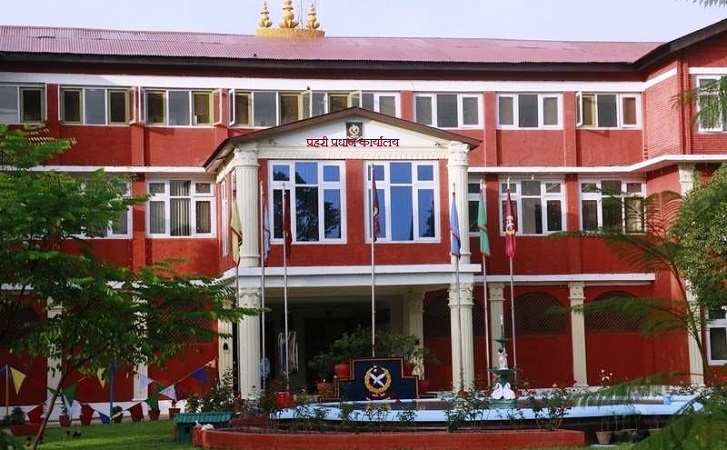

Pokhara, 28 January | The arrest of two police personnel on charges of extorting NPR 200,000 from a drug trafficker has once again exposed the deep-seated issues within the plainclothes police units in Nepal. Police Head Constable Dhirendra Bista and Constable Sujan Karki, who were stationed at the Kathmandu Valley Police Office in Ranipokhari, are currently in the custody of the District Police Range, Kathmandu. According to SP Pawan Kumar Bhattarai, the spokesperson for the range, a rigorous investigation is underway following evidence that they collected money from criminal elements. Notably, Bista has a controversial history; he was previously implicated in a 10-million-rupee hundi robbery in New Road in 2020. Despite his tainted track record, he was redeployed in plainclothes, a move that has drawn severe criticism regarding the supervision and selection process of the force.
Following an influx of complaints regarding financial irregularities and illegal activities involving “ghumuwa” (mobile plainclothes) police, the Police Headquarters has launched a massive internal crackdown. Central Spokesperson DIG Abi Narayan Kafle confirmed that 82 police personnel have been recalled to the headquarters for investigation. This includes 32 officers from various provinces, predominantly from Madhesh Province, who were summoned recently to report with their gear. The Supervison and Monitoring Division is currently scrutinizing their conduct, focusing on allegations of defying organizational policies and engaging in unauthorized economic activities. Initial findings suggest glaring mismanagement, where some personnel without traffic training were assigned traffic duties, and others remained in plainclothes roles for over eight years, violating the recommended tenure limits.
The systemic failure to reform plainclothes policing persists despite multiple past directives and study reports. In March 2024, the then Home Minister had ordered an immediate halt to the deployment of plainclothes police except for specialized crime investigation units. Earlier, a task force led by former DIG Tek Prasad Rai had recommended that personnel in such roles must undergo specific training and serve for a maximum of four years. The task force also emphasized the need for a clean track record for anyone serving without a uniform. However, the latest incident involving Bista proves that these recommendations have largely remained on paper. While the headquarters has vowed to take strict departmental action against those found guilty, the recurring nature of these scandals suggests a need for a more fundamental overhaul of how intelligence-gathering units are managed within the Nepal Police.