













Pokhara, 28 January | Local levels across Nepal have been found squandering billions of rupees from the state treasury under the pretext of preparing Detailed Project Reports (DPRs), which often neither exist in official records nor lead to actual project implementation. According to the latest report from the Office of the Auditor General (OAG), 418 local levels spent a staggering NPR 1.48 billion on creating 1,825 DPRs over the last three years. Disturbingly, a significant portion of these reports is missing from the Government Property Management System (PAMS) and administrative records. For instance, in Simta Rural Municipality of Surkhet, newly elected officials discovered that while NPR 4.5 million was paid for nine DPRs during the previous tenure, not a single report was found in the office archives. Similar cases of missing documentation and fiscal negligence have been reported in Jhapa, Ilam, Bara, and Solukhumbu, where millions were disbursed to consultants without securing the final output or ensuring legal compliance.
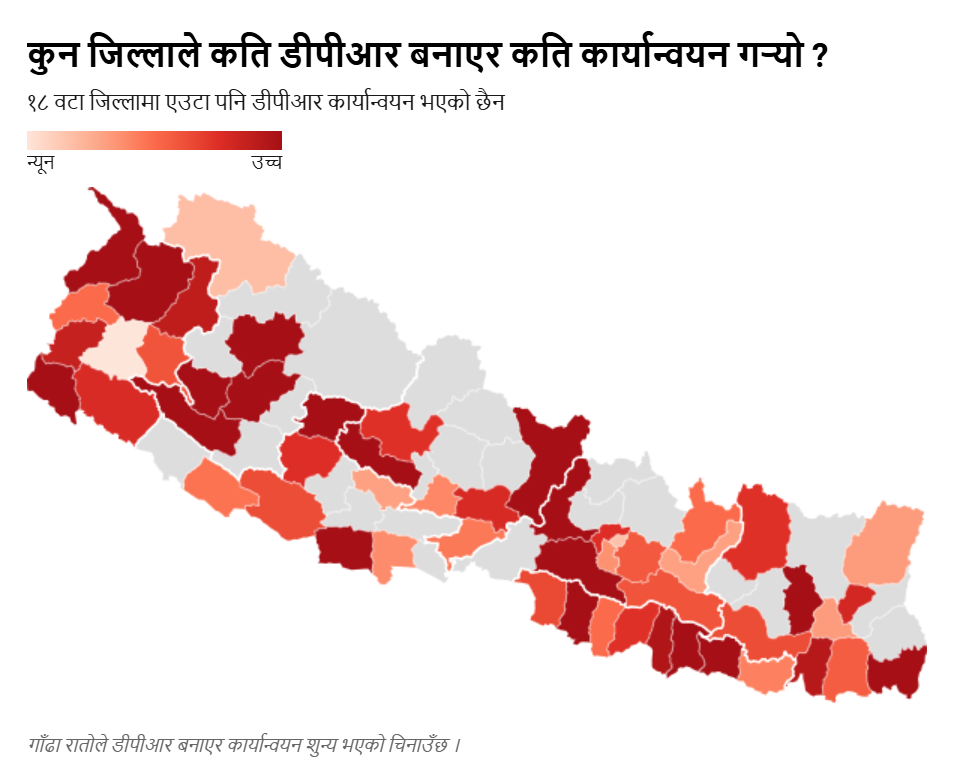
The geographical breakdown of this mismanagement reveals that Koshi Province leads in spending, with local governments investing NPR 130 million into 175 DPRs, more than half of which have seen no further progress. Gandaki Province shows the worst implementation rate, where out of 74 studied DPRs, 62 remain gathering dust in storage. In Sudurpashchim Province, a staggering 82 percent of prepared reports have failed to move into the execution phase. Local leaders often defend these expenditures by claiming that federal and provincial ministries require DPRs as a mandatory prerequisite for budget allocation. However, technical experts and former government secretaries argue that a simple feasibility study, which costs significantly less, would suffice for initial budget requests. They allege that the current trend of commissioning expensive DPRs is often a facade to funnel public funds to favored consultants or close associates through non-competitive procurement processes.
Despite repeated warnings and directives from the OAG and the Commission for the Investigation of Abuse of Authority (CIAA), the practice of commissioning non-implementable DPRs continues unabated. The CIAA issued a 31-point directive in 2022 emphasizing that consultancy expenses must be justified by necessity and followed by immediate implementation. In response to this growing financial indiscretion, Finance Minister Rameshwor Khanal recently announced a cabinet decision prohibiting external consultancy unless it is certified that existing government human resources cannot perform the task. Experts emphasize that unless local governments prioritize projects based on actual budget certainty and professional ethics, the cycle of “copy-paste” reporting and wasteful spending will continue to undermine Nepal’s local development goals and fiscal discipline.