








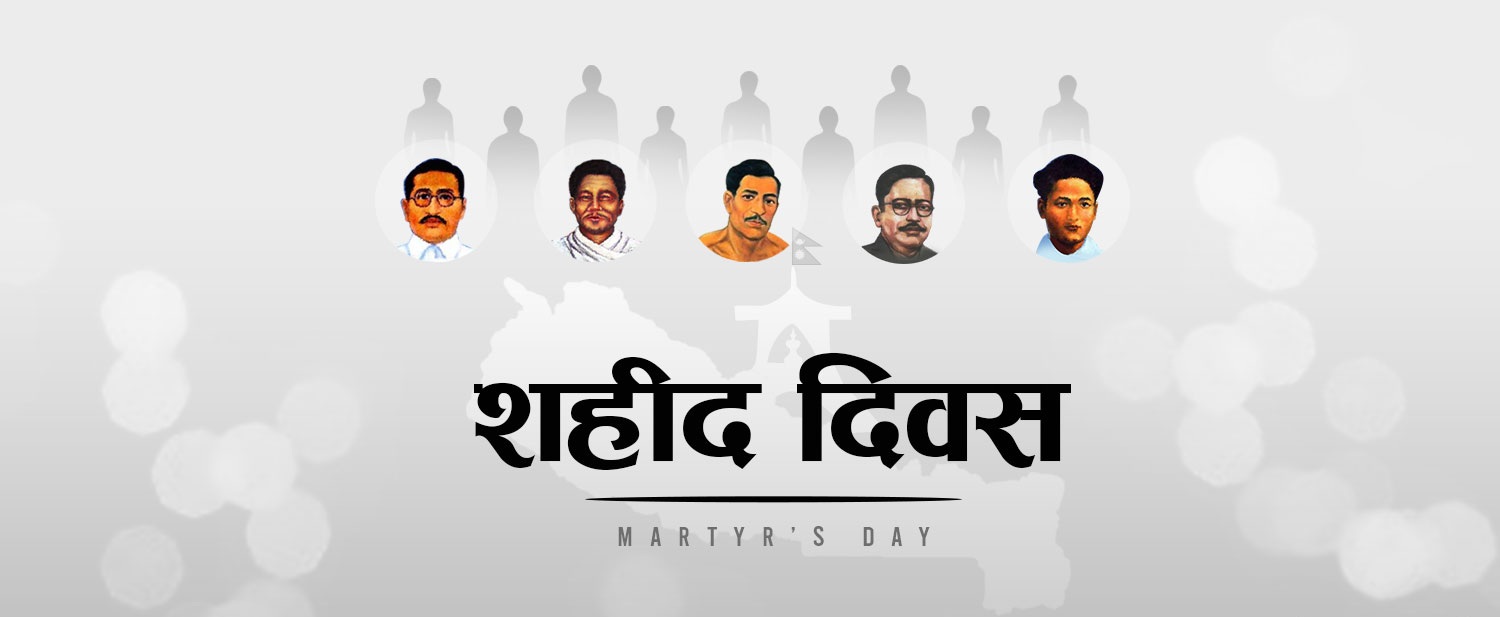

Pokhara, 30 January | Nepal is celebrating National Martyr’s Day today with various commemorative events held across the country to pay tribute to those who sacrificed their lives for democracy, sovereignty, and civil liberties. The day marks the culmination of a week-long celebration dedicated to the four iconic martyrs—Shukraraj Shastri, Dharma Bhakta Mathema, Dashrath Chand, and Gangalal Shrestha—who were executed by the autocratic Rana regime in 1941 for their roles in the anti-Rana movement. A special memorial ceremony was organized at the Martyrs’ Memorial in Lainchaur today, following a morning procession that featured bands from the Nepal Police and Armed Police Force, a march-past, and a horse-drawn carriage displaying the portraits of the martyrs. The event was attended by the Prime Minister, government ministers, high-ranking officials, and security chiefs.
The historical significance of this day dates back to Magh 1997 BS, when the Rana administration intensified its crackdown on political activists. Shukraraj Shastri was hanged from a tree in Teku on January 23, 1941, followed by the execution of Dharma Bhakta Mathema in Sifal on January 26. Two days later, Dashrath Chand and Gangalal Shrestha were shot dead at Shobha Bhagwati. While these four are the most prominent figures, Lakhan Thapa is officially recognized as the first martyr of Nepal for his rebellion against the first Rana Prime Minister. Although the central government had previously curtailed the public holiday for Martyr’s Day, a cabinet decision made in 2024 reinstated the national holiday starting from 2025, reflecting the state’s renewed commitment to honoring national heroes.
In addition to traditional observances, the current interim government has introduced a new commemorative day titled “Gen Z Martyr’s Day,” to be observed annually on September 8 (Bhadra 23). This decision honors the 76 individuals who lost their lives during the spontaneous youth-led protests against corruption and systemic mismanagement that led to the collapse of the previous administration. Despite these official tributes, critics and the general public have expressed concerns over the dilution of the term “martyr.” Many argue that the trend of declaring individuals killed in accidents or minor disputes as martyrs for financial compensation undermines the sanctity of true martyrdom. While leaders consistently pledge to fulfill the dreams of those who died for the nation, there remains a widespread public sentiment that the actual essence of their sacrifice is often lost in ceremonial rhetoric.