


















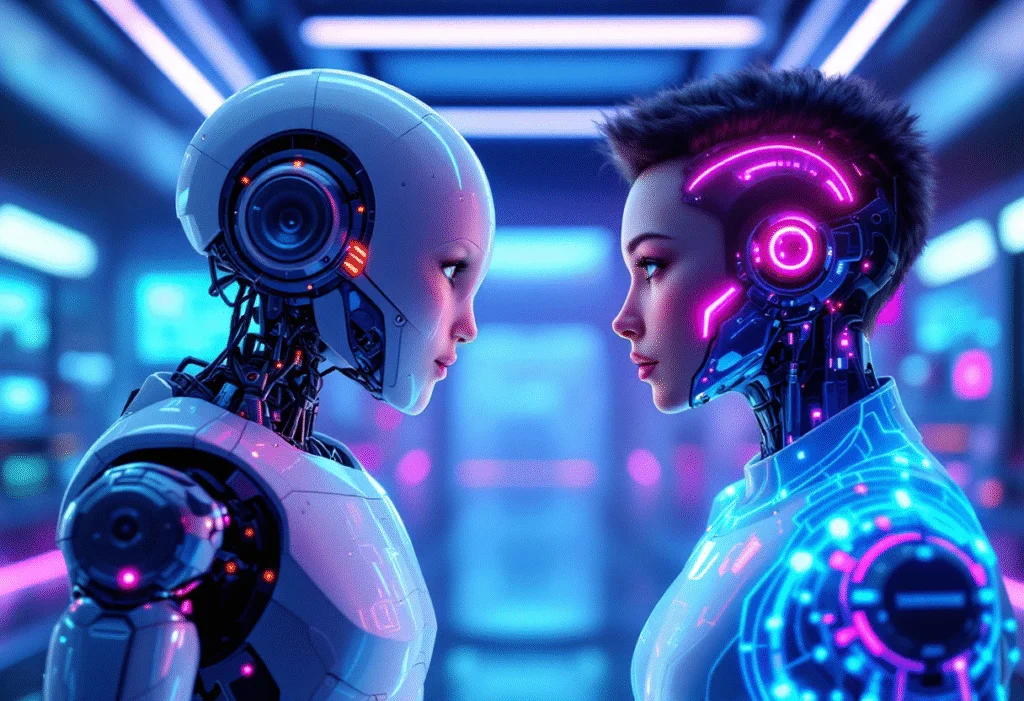

Pokhara, 6 February | For decades, the term “Artificial Intelligence” (AI) has dominated the technological narrative, framing machines as clever mimics of human thought. However, as 2026 unfolds, a profound linguistic and conceptual shift is taking place. Experts and industry leaders are increasingly advocating for the term “Synthetic Intelligence” (SI) to describe the next era of engineered cognition. The core of this debate lies in the distinction between “artificial,” which implies a fake or inferior substitute, and “synthetic,” which refers to a man-made entity that is real and functional in its own right—much like synthetic diamonds are chemically identical to natural ones, whereas simulated diamonds are merely glass.
The foundation of this shift is built upon the realization that modern intelligent systems are not just digital knock-offs of biological neurons. While AI aims to copy human reasoning, SI aims to build entirely new forms of intelligence from scratch. This distinction was famously framed by researchers Peter Norvig and Stuart Russell through an analogy of movement: airplanes fly but do not flap wings like birds, and submarines move through water without “swimming” like fish. Similarly, if thinking is defined as a biological process involving neurons, machines do not think; but if thinking is defined as problem-solving, planning, and adapting, then machines possess a genuine, synthetic form of intelligence. This rebrand is not just semantic—it changes the expectations of governance and design. Instead of judging machines by how well they “pretend” to be human, the world is now focusing on how to govern these independent, engineered systems that solve problems through mechanisms biology never utilized.
The leap into 2026 has introduced “Synthetic Biological Intelligence” (SBI), where biological neural cultures are fused with silicon substrates to create hybrid systems that learn more flexibly than traditional silicon-based chips. Unlike current AI, which requires massive retraining on historical data, these synthetic systems can evolve independently, much like a living organism. Real-world applications are already emerging in medicine, where engineered cells learn to detect diseases in real-time, and in finance, through self-evolving trading models that adapt to market volatility without human intervention. As the industry moves forward, the consensus is clear: while AI improved convenience by imitating the familiar, Synthetic Intelligence is poised to transform the global industrial landscape by creating “authentic” intelligence that extends far beyond the limitations of the human brain.