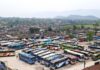
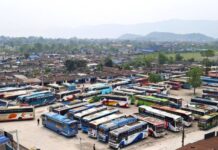











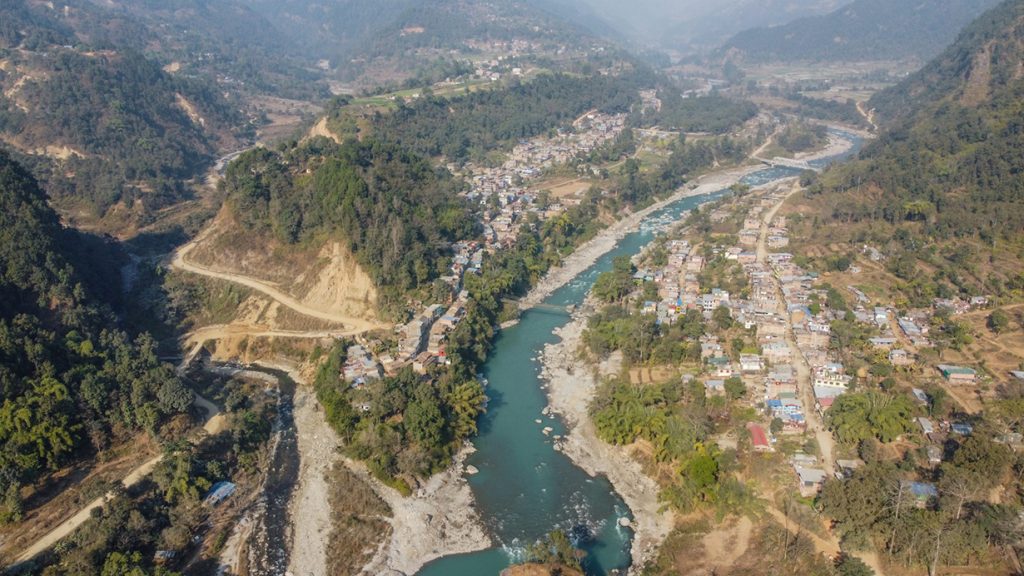

Pokhara, 23 February | The once-bustling commercial hub of Arughat in Gorkha is currently shrouded in a thick layer of dust and despair. As political candidates traverse the rugged roads to solicit votes with grand promises of national development, the residents of Arughat find themselves trapped in a cycle of grief, pain, and profound concern for their future. The primary catalyst for this socio-economic decline is the persistent uncertainty surrounding the 1,200 MW Budhigandaki Hydroelectric Project. While the project was envisioned as a cornerstone of Nepal’s energy future, its slow progress and ambiguous implementation have pushed the lives of thousands into limbo. The vibrant market, which once served as a vital link between lower Gorkha and the northern Tibetan border, is now a shadow of its former self, with residents feeling abandoned by a succession of governments that have used the project more as a political pawn than a serious development goal.
Local entrepreneur Uttam Kumar Shrestha, whose family has conducted business in Arughat for nearly a century, reflects on how the town’s expansion toward Arkhet was halted the moment it was designated as a submergence zone. Although the government initially aimed to complete the project by 2024, significant issues regarding compensation and resettlement remain unresolved. Out of the required 58,000 ropanis of land, approximately 49,000 ropanis have seen compensation distribution totaling 43 billion rupees, yet legal complexities regarding public, trust (Guthi), and school lands persist without a clear government directive. Affected residents like Pampha Surkheti express frustration that the compensation received is insufficient even to purchase a small plot of land elsewhere, making the dream of resettlement seem like a distant mirage. The social fabric of the community is fraying as people migrate in search of stability, leaving behind a fragmented society that feels its historical and cultural identity is being systematically erased by administrative inertia.
Arun Rajauria, CEO of Budhigandaki Hydropower Company Limited, noted that the project is estimated to cost 374 billion rupees, with a financing model of 70 percent debt and 30 percent government investment. Despite the government’s recent decision to commence construction by 2028 and finish within eight years, the lack of a concrete resettlement action plan has stalled any real progress on the ground. High-profile leaders, including former Prime Ministers Dr. Baburam Bhattarai and Pushpa Kamal Dahal ‘Prachanda’, as well as current candidates like Rajendra Bajgain and new challengers from the RSP, have all campaigned on the promise of completing Budhigandaki. However, local resident Manoj Adhikari argues that voters have been treated as mere ‘vote banks’ for decades. The resentment is palpable, with many locals now demanding written guarantees before casting their ballots. As Arughat struggles to preserve its heritage amidst the looming threat of the reservoir, the people’s demand remains simple yet urgent: either move forward with the project and ensure proper resettlement or release their land so they can rebuild their lives on their own terms.