












Pokhara, 3 March | The ongoing conflict in the Middle East has escalated into a catastrophic and unprecedented stage, pushing the entire region into the abyss of a major war. The joint military offensive by Israel and the United States, titled ‘Operation Shield of Judah’ launched on February 28, followed by US President Donald Trump’s ‘Operation Epic Fury’, has dealt an irreparable blow to Iran’s political and military command structure on March 1 and 2. In a development that has sent shockwaves across the globe, Iranian state media confirmed on the morning of March 1 that Supreme Leader Ayatollah Ali Khamenei was killed in an Israeli missile strike. According to the Fars news agency, the strike targeted a high-security underground bunker in Tehran’s Pasteur district where Khamenei was seeking refuge. This devastating attack also claimed the lives of several members of his family and Iran’s top military brass, including Defense Minister Aziz Nasirzadeh, IRGC Ground Forces Commander Mohammad Pakpur, and Chief of Staff of the Iranian Armed Forces Abdolrahim Mousavi. While Iran has declared a 40-day period of mourning, Foreign Minister Abbas Araghchi downplayed the losses as ‘not a major problem,’ signaling that the resistance against the Western offensive would continue unabated.
President Donald Trump, in a dramatic address from the White House, labeled the American component of the mission as ‘Operation Epic Fury,’ characterizing it as a historic opportunity for the Iranian people to reclaim their freedom. Trump boldly predicted that the military operation would achieve its objectives—primarily the permanent dismantling of Iran’s nuclear capabilities—within four weeks or less. According to US Central Command, B-2 stealth bombers have dropped two-thousand-pound bombs on ballistic missile factories and naval headquarters, resulting in the destruction of nine Iranian warships. However, the chaos of active warfare also led to a significant ‘friendly fire’ incident in Kuwait, where three American F-15 fighter jets were accidentally downed by Kuwaiti air defense systems. Fortunately, all six crew members managed to eject and were recovered safely. In a swift retaliation for the assassination of their Supreme Leader, Iran launched a massive missile barrage on the evening of March 1, targeting Israel and US allies in the Gulf. A direct hit on a bomb shelter in Beit Shemesh, Israel, resulted in the deaths of at least nine civilians and left over forty others injured.
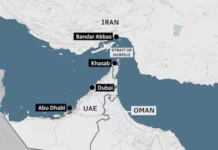
By March 2, the conflict had expanded into multiple fronts, drawing in Lebanon, Iraq, and other neighboring states. Hezbollah, vowing to avenge Khamenei’s death, rained rockets down on the Israeli city of Haifa, prompting a heavy Israeli bombardment of Beirut’s southern suburbs. In Iraq, Iranian-backed militias launched drone strikes against US military camps at Baghdad Airport, while missiles fell near the US embassy in Kuwait City. Iran’s retaliation also extended to civilian infrastructure in the UAE and Qatar, with reports of fires at Dubai’s Fairmont The Palm hotel and damage to Abu Dhabi’s Zayed Port. The humanitarian toll has been devastating; as of Monday afternoon, the Iranian Red Crescent reported 555 fatalities, including 150 civilians, across 130 bombed cities. Despite the intensity of the strikes on Tehran’s government buildings and intelligence centers, Rafael Grossi, head of the IAEA, indicated that Iran’s primary nuclear facilities, such as the Bushehr plant, currently remain intact. With internet services completely severed in Iran and violent protests erupting as far away as Pakistan, the region remains on a knife-edge. Israel has mobilized nearly one million reserve troops, signaling a readiness for a full-scale ground invasion as the US-led coalition appears determined to pursue a strategy of regime change, leaving the world in a state of profound geopolitical uncertainty.