







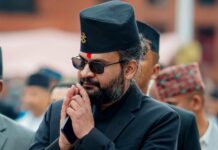


Pokhara, 7 March| In a significant transformation of Nepal’s legislative profile, several former security officials have successfully transitioned from uniforms to the halls of parliament in the 2082 general elections. Leading this wave of change are candidates from the Rastriya Swatantra Party (RSP), who have managed to dismantle the strongholds of established political heavyweights. Among the most notable victories is that of former Deputy Superintendent of Police (DSP) Govinda Panthi, who secured a seat from Gulmi Constituency No. 2. Panthi achieved what many considered an impossible feat by defeating the Vice Chairman of the CPN-UML and a long-standing high-profile leader, Gokarna Bista. The final tally showed Panthi winning with 16,878 votes, a narrow but decisive margin of 496 votes over Bista’s 16,382. Having retired in 2081 after three decades of service in the Nepal Police, Panthi had transitioned into legal practice before joining the RSP just before the elections. His victory on the first attempt is seen as a clear indicator of the public’s desire for new leadership, especially as he campaigned on his record of fighting foreign employment fraud and human trafficking during his police tenure.
Equally historic is the victory of Raju Nath Pandey, the former Senior Superintendent of Police (SSP) of the Kathmandu Metropolitan Police. Contesting from Kathmandu-3 under the RSP banner, Pandey secured a comfortable win with 18,757 votes. He defeated another high-profile candidate, Kulman Ghising of the Ujyalo Nepal Party, who garnered 11,171 votes. Pandey’s journey to parliament is closely tied to his professional relationship with Kathmandu Mayor Balen Shah. After serving as the City Police Chief since August 2022 and leading high-profile campaigns for urban management and sidewalk regulation, Pandey resigned in January to join the political fray. Despite a career that saw both administrative accolades and controversies, including a brief suspension following a dispute with the Chief Administrative Officer, his ability to translate his executive experience into a parliamentary seat on his first try highlights the shifting voter trust toward former administrators. Born in Nuwakot and holding a Master’s degree from Tribhuvan University, Pandey now steps into a legislative role to represent the capital’s residents.
The trend of former security personnel entering politics extends beyond these two winners, with others standing on the threshold of victory. Shambhu Suskera, also known as Shambhu Prasad Dhakal, is currently leading in Jhapa Constituency No. 4. With 18,811 votes, he holds a massive lead over the CPN-UML’s Lal Prasad Sawa Limbu, who has secured only 5,590 votes. Suskera, a former police personnel with 22 years of service, is also a recognized literary figure and radio presenter. After a third-place finish in the 2079 elections, his second attempt appears destined for success. Similarly, former SSP Thapa is leading in Kapilvastu-2 with 21,146 votes, pursued by the Nepali Congress’s Surendra Raj Acharya with 12,184 votes. Thapa, who once served as the Chief of the Kathmandu District Police Circle, shifted to the RSP following internal conflicts within the Congress. While some veterans like former AIGP Bishworaj Pokharel are in a tight race in Okhaldhunga, others have faced disappointing results. Former IGP Dhirubhai Bahadur Pradhan of the RPP and Sarvendra Khanal of the Rastriya Paribartan Party are currently facing significant defeats, proving that while the “RSP wave” has propelled many former officers, party affiliation and local dynamics remain crucial factors in securing a parliamentary mandate.