














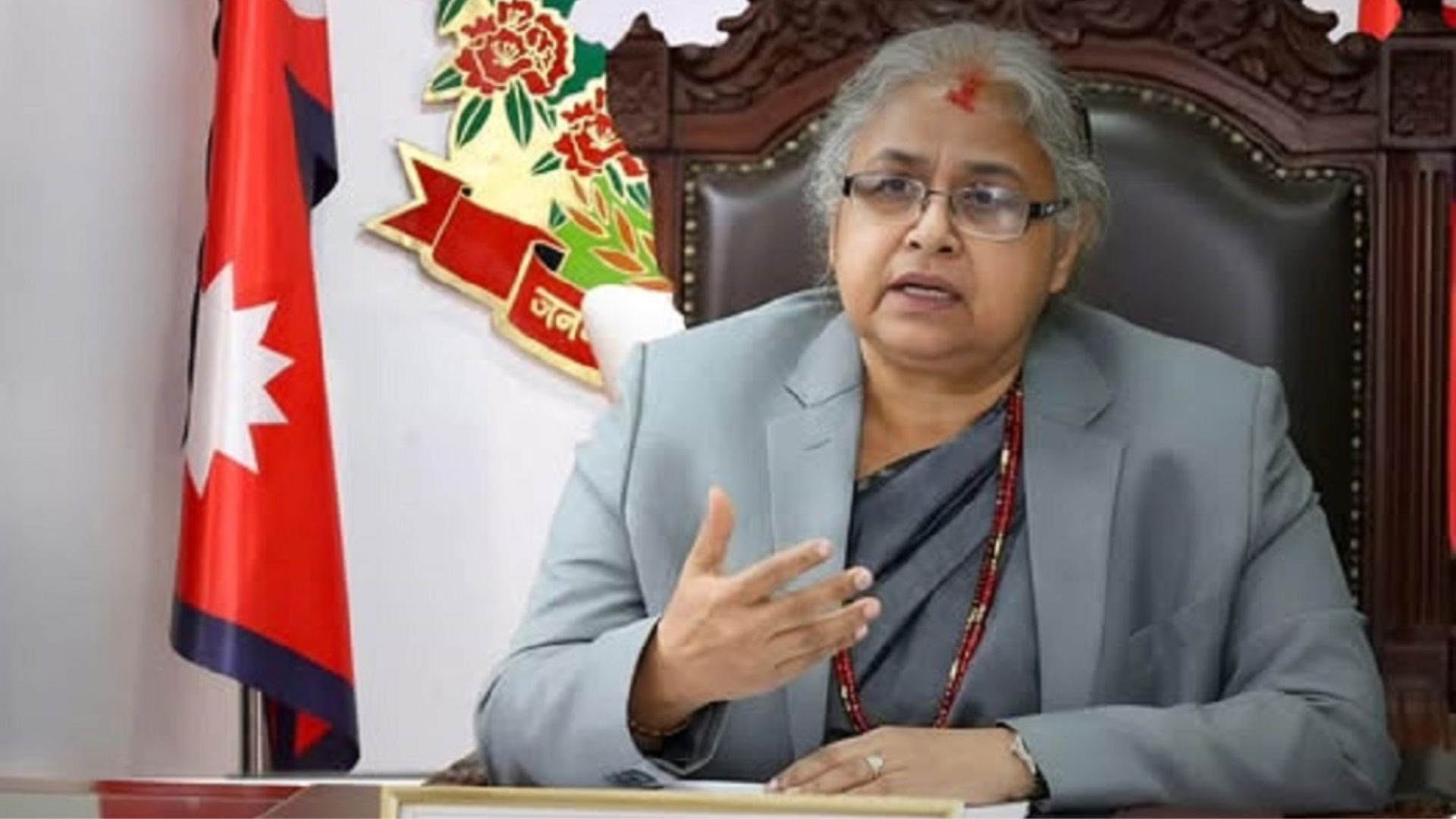

Pokhara, 9 March| The narrative of Nepal’s judicial and political transformation remains incomplete without the mention of Sushila Karki, a woman defined by her unwavering integrity, intellectual depth, and fearless decision-making. Selected as a justice of the Supreme Court a decade ago based on her exceptional legal acumen and impartiality, Karki etched her name in history in 2016 by becoming Nepal’s first female Chief Justice. Her journey from the courtrooms of Biratnagar to the pinnacle of the judiciary was marked by both professional excellence and political turbulence. Most notably, in April 2017, she faced an impeachment motion in Parliament—a move widely criticized as a desperate attempt by the executive to sideline a judicial leader who refused to bow to arbitrary government decisions. However, the Supreme Court’s intervention to stay the impeachment within seven days not only vindicated her but also solidified her standing as a bulwark against constitutional malpractice.
Karki’s legacy transcended the judiciary when she achieved the unprecedented feat of becoming Nepal’s first female Prime Minister. Following the historic ‘Gen-Z’ protests of August 2025, which left the nation in a state of political vacuum and civil unrest, Karki emerged as the sole figure capable of commanding public trust. Tasked with the monumental responsibility of heading an interim administration to conduct general elections within six months, she stepped into the role of head of government during one of the most volatile periods in modern Nepali history. At the time of her appointment, the nation was grieving; hospitals were filled with thousands of injured youth, and the streets bore the scars of a violent crackdown that had claimed scores of lives. As Prime Minister, Karki displayed a rare blend of leadership and empathy, frequently visiting hospitals to comfort the wounded, a gesture that earned her the affectionate moniker of a national “mother” figure.
Transitioning from the bench to the executive office was not without its share of ridicule and prejudice. Critics often targeted her age and physical stamina, while gender-biased internet trolls attempted to undermine her authority. Yet, the former Chief Justice, who continued to publish in international journals and immerse herself in rigorous academic study even after her judicial retirement, remained undeterred. She navigated a fragmented political landscape where the very groups that had supported her appointment were divided into factions, frequently pressuring her to resign. Amidst the physical ruins of burnt administrative buildings, police stations, and ward offices, and the plummeting morale of security forces, Karki maintained a steady hand. She knew exactly when to be an authoritative commander and when to be a conciliatory guardian, ultimately guiding the nation through its darkest hours toward the light of a new democratic mandate.
The defining success of Karki’s premiership was the peaceful and timely execution of the general elections. Her tenure was characterized by a lack of personal ego and an absence of private greed—traits rooted in her simple lifestyle and intellectual honesty. She was a leader who felt no shame in admitting the limits of her knowledge, often saying “I don’t know” when confronted with unfamiliar territory, a quality that fostered genuine collaboration. As the world celebrates the 116th International Women’s Day, Sushila Karki stands as a beacon of justice, hope, and transparency. Embodying this year’s theme, “Opportunity leads to achievement,” Karki has demonstrated that when a woman is steadfast and determined, no institutional or societal barrier is insurmountable. Her story is a testament to the fact that power, when handled with clean hands and a courageous heart, can indeed rewrite the destiny of a nation.