













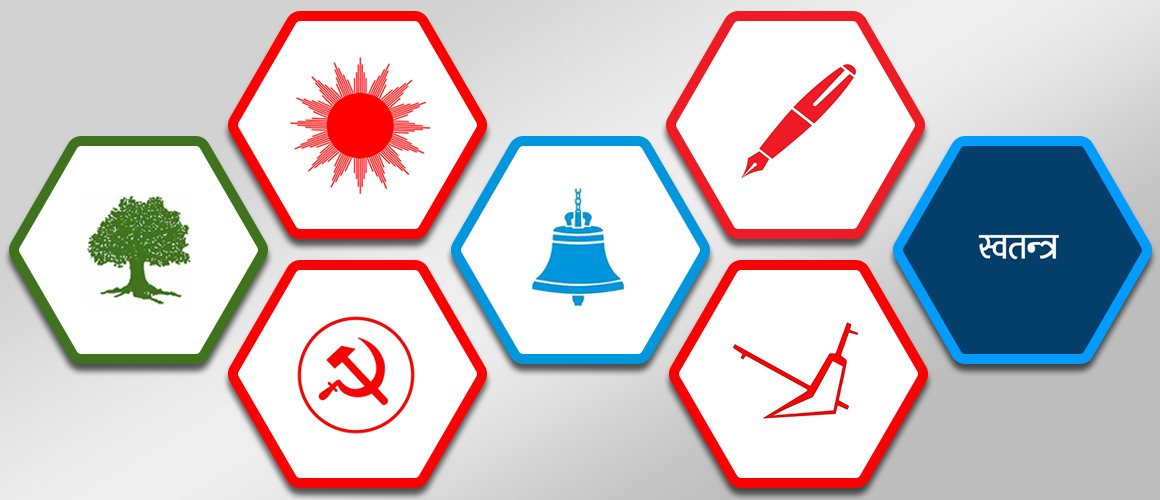

Pokhara, 9 March| The Election Commission has completed the counting of nearly three-quarters of the total votes cast under the Proportional Representation (PR) system as of Monday morning. According to the latest data released by the commission, approximately 7.54 million votes have been counted so far, providing a clearer picture of the upcoming parliament’s composition. The current trend shows that along with the Rastriya Swatantra Party (RSP), Nepali Congress, CPN-UML, and the Nepal Communist Party, the Rashtriya Prajatantra Party (RPP) and the newly formed Shram Sanskriti Party have crossed the mandatory three percent threshold. However, the status of the RPP and the Shram Sanskriti Party remains precarious. With more than 2.5 million votes still left to be counted, it remains uncertain whether their current ratios will hold or decline. If their share falls below three percent in the remaining ballots, they will fail to qualify for any PR seats in the House.
As per the latest updates, the Rastriya Swatantra Party (RSP) continues its dominant streak, securing 3,557,000 votes, which accounts for nearly 48.5 percent of the total valid votes counted thus far. Although its initial lead has slightly decreased in terms of ratio, the party is projected to secure 58 PR seats, cementing its position as a major political force. Following behind, the Nepali Congress has garnered 1,233,000 votes, representing approximately 16.5 percent of the counted ballots. This share translates to a projected 20 seats under the proportional system. The shift in voter sentiment away from traditional power centers toward newer political alternatives is becoming increasingly evident as the counting progresses toward the final stages.
The CPN-UML currently holds the third position with 1,043,000 votes, capturing roughly 14 percent of the total and is expected to win 16 seats. Meanwhile, the Nepal Communist Party (NCP) has secured 535,000 votes, making up about seven percent of the count, which would grant them 8 seats in the legislature. The situation for the smaller contenders is much more tense; the Rashtriya Prajatantra Party has 257,000 votes, while the Shram Sanskriti Party stands at 239,000 votes. While both are currently poised to take 4 seats each, their proximity to the three percent mark means they are not yet out of the danger zone. The final outcome for these two parties depends heavily on the geographic origin of the uncounted 2.5 million votes and whether those regions favor their ideologies.
According to the Election Commission’s analysis of the ratio between total cast and valid votes, it is estimated that a party will need roughly 316,000 votes by the end of the final tally to qualify for the proportional representation list. While the top four parties have comfortably surpassed this projected limit, the RPP and Shram Sanskriti Party are still striving to reach this definitive safety margin. If the remaining ballots show a dip in their percentage, they may be excluded from seat allocation entirely, losing their status as national parties. This election has highlighted a significant political realignment in Nepal, where voters have clearly balanced their preferences between established legacies and emerging visions. The final results, expected within the next few days, will determine whether the new parliament will be a multi-party mosaic or a house dominated by a few powerful factions.