

















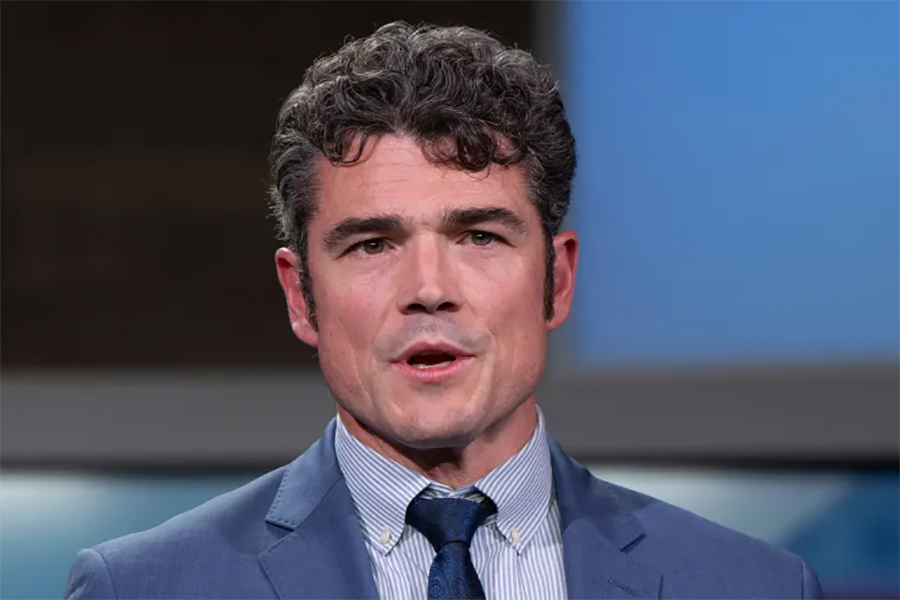

Pokhara, 19 March| Joe Kent, Director of the U.S. Counterterrorism Center, has resigned from his position, citing strong disagreement with the administration’s approach toward a potential conflict involving Iran. In a statement shared on social media, Kent urged President Donald Trump to reconsider his stance, arguing that the current policy direction does not align with American national interests.
In his letter posted on X, Kent stated that Iran does not pose an immediate threat to the United States, directly challenging the narrative used to justify escalating tensions. He alleged that the push toward conflict was influenced by pressure from Israel and its powerful lobbying presence in the United States. According to Kent, certain high-ranking Israeli officials and influential American media figures have spread misinformation that shaped the administration’s decision-making process. He emphasized that such narratives have undermined the core principles of the “America First” policy platform.
Kent, aged 45, is a seasoned professional with extensive experience in U.S. Special Forces and the Central Intelligence Agency. Over the course of his career, he has been deployed abroad eleven times, including missions in Iraq. His service record reflects a long-standing commitment to national security both domestically and internationally. His personal life has also been marked by sacrifice, as his wife, Shannon Kent, who served as a cryptologic technician in the U.S. Navy, was killed in a suicide bombing in Syria in 2019.
In his resignation letter, Kent highlighted the human and economic costs of prolonged military engagements in the Middle East. He wrote that by mid-2025, President Trump had acknowledged that such conflicts have deprived the United States of the lives of its patriots while also weakening the nation’s wealth and prosperity. Kent argued that it would be unjustifiable to send another generation into wars that do not serve the direct interests of the American people.
Kent, a long-time supporter of Trump, was appointed to the position in July of the previous year. His resignation adds to a series of departures by senior officials within the administration, raising concerns about internal disagreements and policy coherence. Despite this, reports suggest that the rate of turnover during Trump’s second term remains lower than during his first term between 2017 and 2021.
Observers believe that Kent’s departure could intensify internal debates over U.S. foreign policy, particularly regarding its role in the Middle East and its stance toward Iran. The development signals potential friction within the administration as it navigates complex geopolitical challenges.