
















Pokhara, 9 September | One year after Nepal’s Gen Z uprising, debate over its causes, consequences and long-term political direction remains intense. The movement has been interpreted in sharply different ways, much like the traditional tale of the elephant and the blind men, with some viewing it primarily as an internal political and economic explosion and others pointing to possible geopolitical interference. A closer reading of the developments, however, suggests that the uprising was rooted mainly in long-standing domestic grievances, including political corruption, weak public service delivery, limited employment opportunities, economic frustration and the changing political consciousness of a digitally connected generation.
On 23 Bhadra 2082, a group of largely unorganised Gen Z youths began a peaceful demonstration from Maitighar towards the Parliament building at New Baneshwor in Kathmandu. The immediate demand was the lifting of restrictions imposed on several social media platforms. Anger over corruption, political privilege and the growing perception of a “nepo-baby” culture also featured prominently in the protests. As the crowd expanded outside Parliament, tensions escalated rapidly. A violent confrontation followed, with the state using force against protesters. Nineteen people were killed, turning what had begun as a relatively limited demonstration into a nationwide political crisis.
The following day, the movement spread across the country and became highly violent. The Parliament building, Singha Durbar, the Supreme Court, the President’s Office and other major symbols of state authority were attacked and set on fire. Police offices and posts were also heavily damaged in many places. Political leaders and their properties were targeted, while prisoners escaped from jails in several parts of the country. The overall violence reportedly left 76 people dead and caused economic losses worth billions of rupees. The Nepal Army remained largely on the sidelines during the crisis, while the state’s institutional capacity came under severe pressure.
The prime minister resigned on 24 Bhadra, leaving the country in a period of profound political uncertainty. Three days later, an interim government led by former Chief Justice Sushila Karki was formed. The interim administration subsequently recommended the dissolution of the House of Representatives and announced general elections for 21 Falgun 2082. The constitutional system, which had appeared to be under extreme pressure, survived the crisis and entered a new political phase.
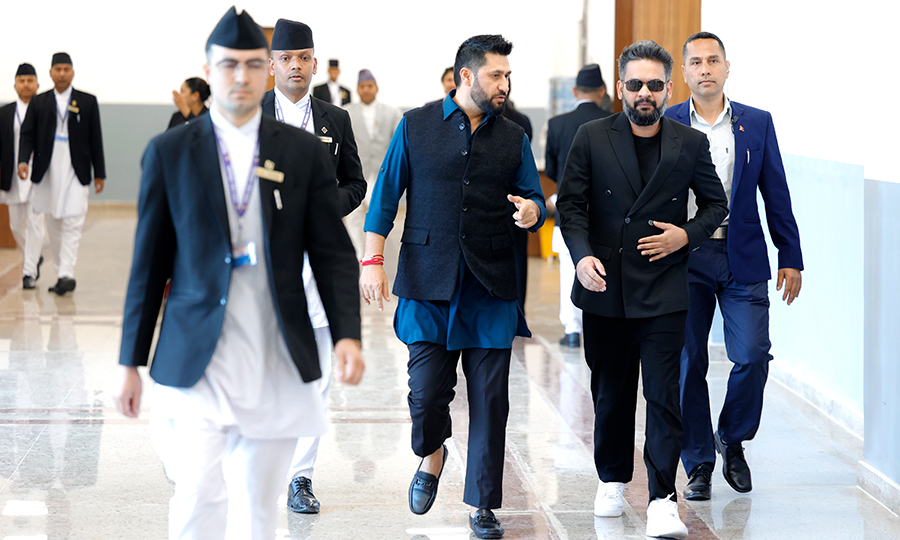
The election produced a dramatic realignment. The Rastriya Swatantra Party, a relatively new political force, reportedly secured about 48 percent of the vote and won nearly a two-thirds majority of parliamentary seats. Established political parties suffered a historic setback, while 36-year-old Balendra Shah became prime minister. The result marked one of the most significant generational and political shifts in Nepal’s recent history.
An inquiry commission led by former High Court Justice Gauribahadur Karki was established to investigate the events of 23 and 24 Bhadra. The commission reportedly submitted a 907-page report to the government on 24 Falgun, but the report has not yet been formally released to the public. Portions circulated through digital media reportedly provide a detailed account of the events of 23 Bhadra and recommend action against those considered responsible. Regarding the violence of 24 Bhadra, the report is said to provide a broader account while calling for further investigation. It also reportedly discusses the role of Discord and preparations for violent activities by some individuals before the uprising.
The term Gen Z generally refers to people born between 1997 and 2013. Having grown up alongside smartphones, the internet, social media, artificial intelligence and rapidly developing digital technologies, they are commonly described as digital natives. The term itself is not an official scientific classification, but the generation has developed distinctive patterns of communication, political participation and information consumption. In Nepal, these characteristics became particularly visible during the uprising. Traditional political organisation has generally followed a party, leader, cadre and public structure, whereas digital-era mobilisation increasingly operates through individuals, smartphones, networks and collective action.
Economic frustration was another major driver. Nepal has struggled to generate sufficient domestic employment, forcing large numbers of young people to seek opportunities abroad. The country remains heavily dependent on imports, while domestic production and productive employment remain comparatively weak. Unequal access to quality education and healthcare, limited economic mobility and continued dependence on foreign labour markets have deepened frustration among younger citizens. A generation connected through smartphones to London, Silicon Valley, Tokyo, Dubai, Seoul and Sydney is increasingly aware of the gap between its aspirations and the opportunities available at home.
The geopolitical dimension remains more difficult to establish. Nepal occupies a strategically sensitive position between India and China and also attracts significant interest from the United States and other Western powers. Questions have therefore emerged about whether external actors attempted to influence the uprising. Yet there is no conclusive evidence in the material presented to establish that foreign powers created or directed the movement. External influence should neither be dismissed without investigation nor exaggerated without evidence. The strongest explanation remains that the principal roots of the uprising were domestic, while geopolitical interests may have constituted a secondary dimension.
Nepal now stands at a significant crossroads. The emergence of a new political force and younger leadership has created an opportunity to replace an increasingly exhausted political culture with a more accountable and responsive system. At the same time, serious questions remain about the ideological clarity of the new political leadership, its commitment to republicanism, federalism, secularism and inclusive democracy, and its ability to maintain internal unity. A coalition of diverse political personalities can potentially develop into a broad alternative force, but internal contradictions could also produce another cycle of political instability.
The economic test may ultimately prove decisive. The new leadership faces pressure to create large numbers of jobs inside the country, expand domestic production, reduce dependence on imported goods, strengthen exports, improve education and healthcare, and secure food and energy supplies. Nepal needs a development strategy capable of moving beyond slow incremental growth towards faster structural transformation. A balanced relationship between the state, market and communities may be more appropriate than either unrestricted market fundamentalism or excessive state control.
Geopolitics will present another major challenge. As strategic competition between China, India and Western powers intensifies across Asia, Nepal will need to protect its national interests without becoming trapped in great-power rivalry. A balanced foreign policy based on Panchsheel, non-alignment and national sovereignty will remain important. Nepal’s ability to maintain constructive relations with both major neighbours while engaging the wider international community could determine whether geopolitical pressure becomes an opportunity or a source of prolonged instability.
Climate change has added another urgent dimension. The recent Himalayan disaster has demonstrated that climate-related risks can no longer be treated as distant problems. Alongside rescue, relief, rehabilitation and reconstruction, Nepal faces the task of internationalising the climate crisis affecting its mountain regions and seeking fair international support and compensation for climate-related losses. Green development and climate-resilient infrastructure will increasingly have to become central elements of national planning.
One year after the uprising, therefore, the Gen Z movement should not be understood simply as a spontaneous episode or a generational revolt. It was the product of overlapping political dissatisfaction, economic insecurity, digital mobilisation and a changing geopolitical environment. Its lasting significance will depend not on the fall of old political leaders alone, but on whether the new political order can deliver better governance, employment, economic transformation, social justice, constitutional stability and national sovereignty. Nepal’s democratic future will ultimately be measured by the changes citizens experience in their daily lives.