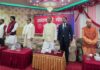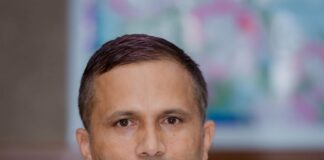

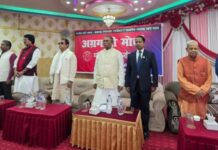

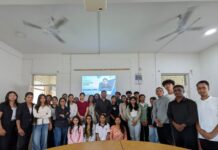





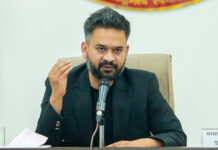
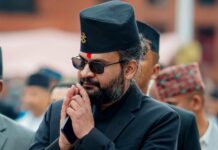


Pokhara, 26 December| For over two decades, the power corridors of Nepal were confined to Baluwatar, Singha Durbar, and Balkot; however, the political focus has abruptly shifted to a quiet neighborhood in Lalitpur called Jwagal. Kathmandu Metropolitan City Mayor Balen Shah spent over twelve hours at a private residence in Jwagal, engaging in marathon meetings with political leaders, Gen Z activists, and influential public figures. During these sessions, Shah officially declared his intent to enter mainstream party politics, positioning himself as the catalyst for a unified alternative front. This strategic mobilization follows a high-stakes dialogue initiated on December 22, signaling a departure from traditional political structures. Shah met with Rastriya Swatantra Party (RSP) Chairman Rabi Lamichhane, Kulman Ghising of the Ujyalo Nepal campaign, former Prime Minister Dr. Baburam Bhattarai, and several youth icons to discuss the blueprint for a new political era.
Balen Shah’s decision to spearhead the ‘Desh Bikash Party’ stems from a desire to maintain an independent leadership role rather than merely serving as a promotional figure for existing alternative parties. While Rabi Lamichhane presented a non-paper outlining flexible terms for party nomenclature, election symbols, and candidate ratios, Shah emphasized the need for a visionary leadership that can secure a decisive majority in the upcoming elections. His strategy involves consolidating various independent forces, including local leaders like Harka Sampang and Gopi Hamal, under a single cohesive platform. Kulman Ghising’s public statement regarding joint national development efforts and Dr. Baburam Bhattarai’s endorsement of a unified alternative force have added significant weight to Shah’s initiative. Shah clarified that he is already preparing a list of proportional representation candidates, ensuring that individuals with clean public images and proven track records are prioritized.
The political activity at Jwagal on Thursday attracted a diverse range of figures, from congress leader Sunil Sharma to activists like Rakshya Bom and Milan Pandey. Despite the heavy media presence and occasional logistical hurdles, the atmosphere was one of calculated transition. Amaresh Kumar Singh remarked that this gathering marks the beginning of a decisive battle between traditional establishments and emerging reformist forces. Shah’s proactive approach, including individual meetings with diverse stakeholders, demonstrates a newfound urgency in his political trajectory. As Jwagal establishes itself as the ‘new headquarters’ for alternative politics, the subsequent rounds of negotiations among Shah, Lamichhane, and Ghising are expected to define the final modality of this alliance. The shift from anti-establishment protests to organized institutional politics marks a critical juncture that could fundamentally alter the electoral landscape of Nepal.