






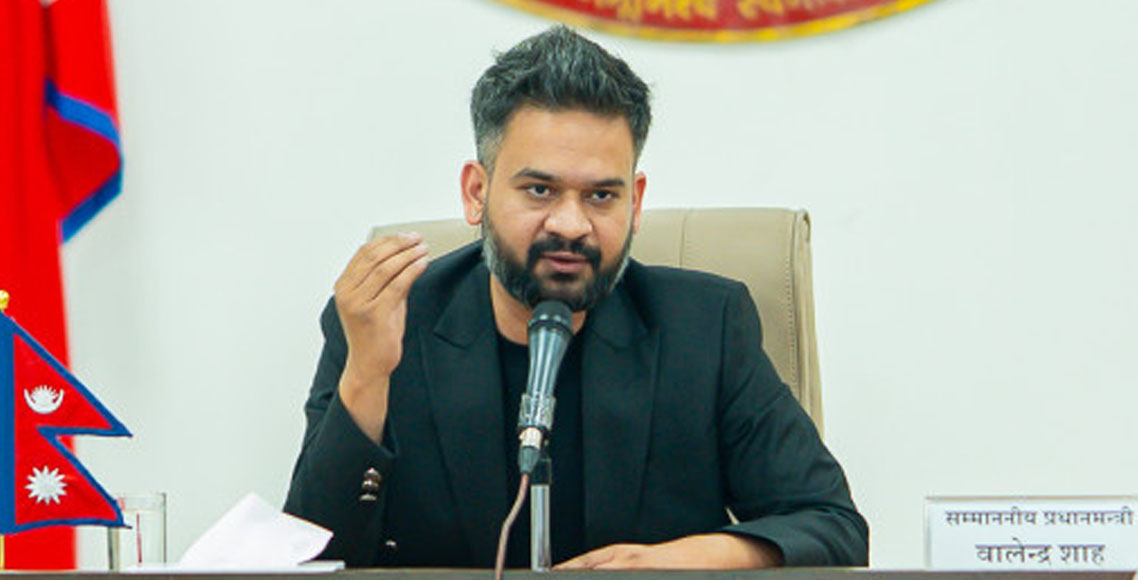

Pokhara, 10 June | Political tensions in Nepal have intensified after remarks made by Prime Minister Balen Shah regarding the Nepal–India border issue triggered a prolonged deadlock in the House of Representatives. The controversy has disrupted parliamentary proceedings and sparked debate over the responsibilities of the government, the role of the opposition, and the need for political dialogue to restore normal legislative business.
The current parliamentary session began on April 28, but apart from the joint meeting called for the presentation of the government’s policies and programs and the subsequent budget presentation, most parliamentary proceedings have faced protests and disruptions. The dispute initially gained momentum when Prime Minister Shah left the parliamentary chamber while President Ram Chandra Paudel was presenting the government’s policy and program. Opposition parties criticized the move as inappropriate and inconsistent with parliamentary decorum, leading to several days of protest inside the legislature.
The controversy continued when questions raised by lawmakers during discussions on the government’s policy and program were answered by Finance Minister Dr. Swarnim Wagle instead of the Prime Minister. Opposition parties argued that such responses should have come directly from the head of government. As disagreements intensified, parliamentary proceedings became increasingly difficult to conduct smoothly.
The situation escalated further when Prime Minister Shah later appeared in the House and responded to questions raised by lawmakers. While addressing concerns related to the Nepal–India border issue, he stated that resolving border disputes required discussions among historians, survey experts, and specialists from both countries. However, the debate intensified when he remarked that Nepal had also encroached upon Indian territory in several places, a claim he said he had learned after becoming Prime Minister. The statement quickly became the focal point of political controversy.
Opposition parties have argued that the Prime Minister’s remarks contradict Nepal’s established national position on border issues and have demanded clarification. According to opposition lawmakers, such statements from the country’s chief executive carry diplomatic significance and may affect Nepal’s official stance in matters related to national sovereignty and foreign relations. As a result, they have continued to obstruct parliamentary proceedings until their concerns are addressed.
Political observers note that although the Speaker is responsible for presiding over the House, the government plays a central role in ensuring that Parliament functions effectively. They argue that the Prime Minister, as leader of the majority in the House, bears primary responsibility for creating consensus and facilitating dialogue. Many analysts believe that direct communication, clarification, and political flexibility from all sides could help break the deadlock.
The continued disruption has raised concerns because Parliament is responsible for essential functions such as lawmaking, budget approval, parliamentary hearings, and oversight of the executive branch. With legislative business stalled, pressure is growing on both the government and opposition parties to find a mutually acceptable solution. Observers believe that prioritizing national interest, parliamentary responsibility, and constructive dialogue will be crucial in restoring normal parliamentary operations and reducing political tensions in the days ahead.