
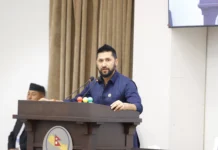








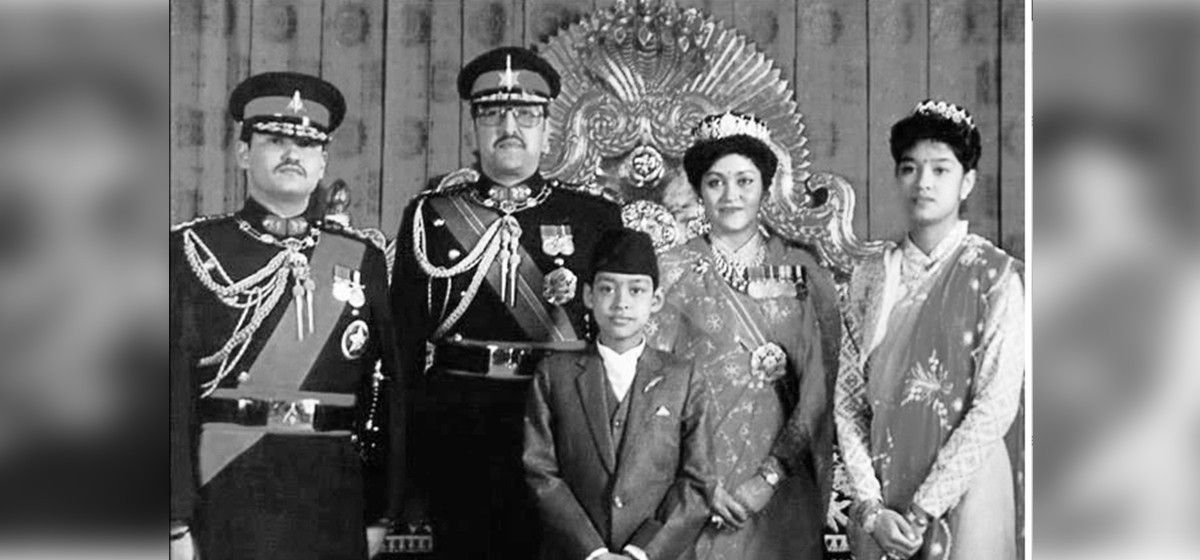

Pokhara, 10 June | The Government of Nepal has announced a decision to move forward with a renewed investigation into the 2001 Royal Palace Massacre, one of the most significant and controversial events in the country’s modern history. The decision was made by Home Minister Sudan Gurung while assuming office for a second time, placing the long-debated case among the four major priorities unveiled upon his return. The move has reignited national discussion about an incident that has remained surrounded by unanswered questions and public skepticism for more than two decades.
The Royal Palace Massacre occurred on June 1, 2001, during a gathering of members of the royal family and close relatives at Tribhuvan Sadan inside the Narayanhiti Royal Palace. During the event, gunfire erupted, resulting in the deaths of King Birendra, Queen Aishwarya, Crown Prince Dipendra, Prince Nirajan, Princess Shruti, and several other members of the royal family and their relatives. Many of the injured were rushed to a military hospital, but most were later declared dead. Following the tragedy, Gyanendra Shah, the younger brother of King Birendra, ascended to the throne after the deaths of the immediate heirs.
Shortly after the incident, a fact-finding committee led by the Chief Justice and the Speaker of Parliament conducted an inquiry and submitted its report within a week. The committee concluded that Crown Prince Dipendra had opened fire on members of the royal family before ultimately shooting himself. However, the findings were questioned by many citizens, observers, and political commentators. Critics argued that several aspects of the incident remained unclear and that the investigation failed to address all concerns raised by the public.
The latest decision by the Home Minister has been widely interpreted as an indication that the government is willing to revisit the conclusions of the earlier inquiry. The announcement has revived interest in numerous unresolved issues associated with the tragedy. Questions regarding the sequence of events, the circumstances surrounding the shooting, the treatment of the injured, the absence of post-mortem examinations, and the later demolition of Tribhuvan Sadan continue to be discussed in public and political circles.
The challenge facing investigators is significant. More than twenty-five years have passed since the massacre, several individuals connected to the event have died, and important physical evidence may no longer be available. Furthermore, the original site where the tragedy occurred has undergone major changes, making any reconstruction of events more difficult. Despite these obstacles, the government’s decision has generated expectations that a fresh review may provide greater clarity regarding one of Nepal’s most debated historical incidents.
Observers believe that the renewed investigation carries importance beyond the historical record. It is also viewed as a matter of public accountability, transparency, and confidence in state institutions. Whether the new effort can provide definitive answers remains uncertain, but the decision has once again brought the Royal Palace Massacre to the forefront of national attention and reopened discussion about a tragedy that continues to shape Nepal’s political memory.