











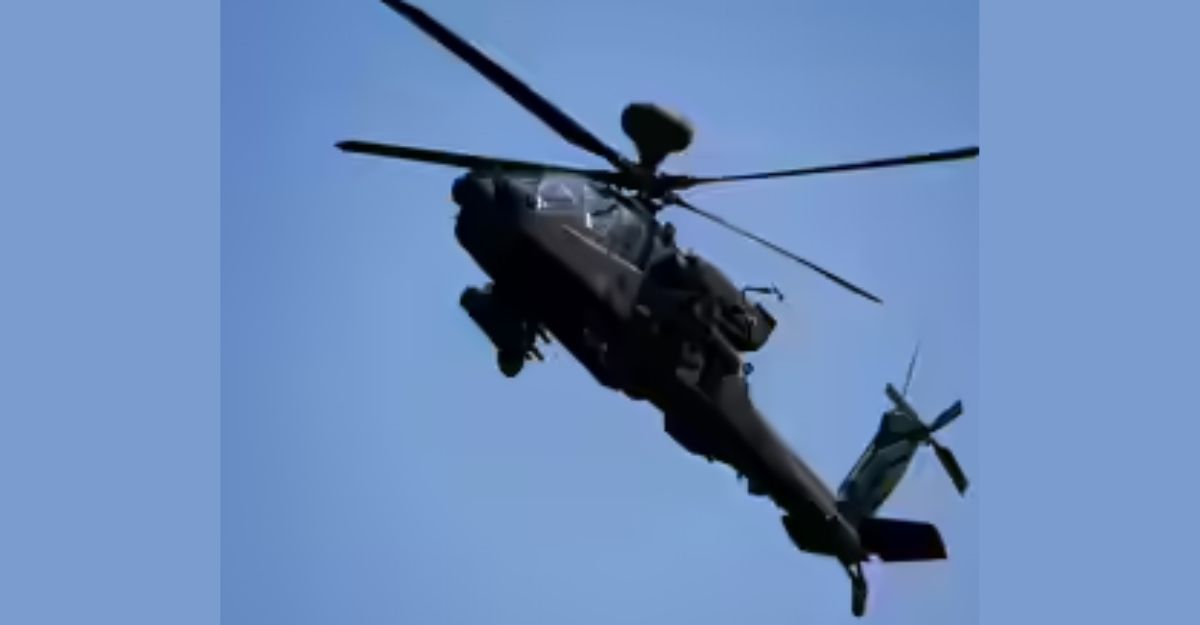

Pokhara, 10 June | Tensions between the United States and Iran have escalated once again following reports that an American Apache helicopter was brought down near the Strait of Hormuz and a subsequent US military strike on Iran’s Qeshm Island. The latest developments have raised concerns about the possibility of renewed conflict in West Asia, with both sides exchanging warnings and signaling their readiness to respond to any further military action. Analysts say the incident has placed additional pressure on an already fragile ceasefire and increased fears of a wider regional confrontation.
According to Iranian state media, explosions were heard on Qeshm Island, a strategically important island located near the Strait of Hormuz, one of the world’s most critical maritime trade routes. Reports indicated that the attack was focused on Qeshm Island rather than Tehran or other major Iranian cities. While authorities have not yet released detailed information regarding casualties or material damage, the incident has attracted significant international attention because of the island’s proximity to key shipping lanes used for global energy and commercial trade.
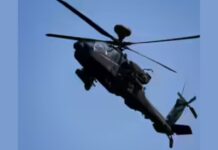
The escalation follows statements made by US President Donald Trump, who accused Iran of being responsible for the downing of an American Apache helicopter. Trump stated that the helicopter had been conducting patrol operations over the Strait of Hormuz when the incident occurred. Describing the event as a direct challenge to US military operations in the region, he warned that the United States would respond to the attack. Despite the loss of the aircraft, Trump confirmed that both crew members survived and did not suffer serious injuries.
The US military reported that the helicopter crashed near the coast of Oman on Monday and that the two crew members were successfully rescued on Tuesday morning. According to Captain Tim Hawkins, spokesperson for the US Central Command, an unmanned drone boat located the pilots after they had spent nearly two hours in the water. Both personnel were transported to safety, and officials said their condition remained stable.
Iran responded strongly to the US strike. Iranian Foreign Minister Abbas Araghchi issued a warning through the social media platform X, stating that foreign military forces operating near Iran’s region remain at risk. He emphasized that Iran prefers diplomacy but also possesses the capability to respond through other means if necessary. His remarks reflected Tehran’s determination to answer what it views as a threat to its national security and regional interests.
The helicopter incident and the subsequent US attack have further strained a ceasefire that has been in place for nearly two months. Recent clashes around the Strait of Hormuz, combined with Israeli military operations in Lebanon, have increased instability across the region. Since military operations against Iran began on February 28, the conflict has affected not only regional security but also broader economic confidence and international markets. With no permanent agreement yet reached between the opposing sides, concerns continue to grow that the current crisis could evolve into a larger and more prolonged conflict.