








Pokhara, 20 July – A tragic incident on May 28, which saw the death of a Cambodian soldier, has reignited long-standing border tensions between Cambodia and Thailand, underscoring the delicate nature of their bilateral relationship. While the dispute over the Preah Vihear Temple has historically dominated their diplomatic landscape, this recent fatality has become a critical flashpoint, threatening regional stability.
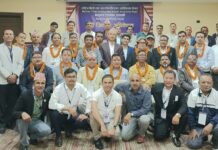
In response to the escalating situation, a seminar titled “Cambodia-Thailand Relations: Towards Peace and a Stable Neighbourhood and Region” was convened on July 17 at the Raffles Hotel Le Royal in Phnom Penh. Jointly organized by the Cambodian Center for Regional Studies (CCRS) and the Konrad Adenauer Stiftung (KAS) Cambodia, the event brought together over 100 scholars, policymakers, and experts to deliberate on the future of relations and explore avenues for peace.
Pou Sothirak, a senior advisor at the CCRS and co-author of a guide on the Preah Vihear conflict, urged both nations to revert to the open and cooperative border policies that existed prior to the recent escalation. He emphasized the paramount importance of re-establishing trust and understanding through mutual respect, cautioning against excessive focus on minor details or inflammatory rhetoric. “Just re-open all border crossings and restore trust and understanding based on mutual respect. Refrain from inflammatory rhetoric and focus on ways to settle the dispute,” Sothirak stated, warning that “there are people who want Cambodia and Thailand to be split like this, to create misery, from both sides,” including external actors who benefit from the continued division.
Po Sovinda, director of the Center for Southeast Asian Studies at the Royal University of Phnom Penh, delved into the deep historical roots of the conflict, particularly highlighting the colonial-era France-Siam Treaties of 1904 and 1907. He explained that understanding these past agreements is crucial to comprehending the present tensions. Despite the International Court of Justice (ICJ) ruling in 1962 that affirmed Cambodia’s sovereignty over the Preah Vihear Temple, the surrounding 4.6 square kilometers remain contested. Sovinda stressed that “rising nationalism in both countries has exacerbated the situation, with historical claims being used to rally support domestically,” complicating efforts to resolve these territorial disputes which are “deeply entangled with political factors, such as national sovereignty, governance and historical legacies, as well as emotional aspects, like nationalism, pride and the sensitive history between the two countries.”
Aun Chhengpor, a policy researcher at Future Forum, pointed out that the Cambodian soldier’s death has significantly damaged bilateral relations, impacting trade and the livelihoods of border communities. He noted the increased military build-ups along the shared border, fostering a climate of suspicion and fear, and consequently, heightened nationalism. Chhengpor also suggested that Cambodia’s growing confidence, partly due to its strengthened military and strategic partnerships, notably with China, has altered the dynamic of the current standoff. While Cambodia’s decision to bring the dispute to the ICJ is a positive step towards international law, Thailand’s reluctance to accept the ICJ’s jurisdiction poses ongoing challenges, with Chhengpor warning of potential prolonged tensions due to Thailand’s domestic political developments.
Both Chhengpor and Sothirak underscored the vital role of civil society, think tanks, and the media in de-escalating tensions. They called for a collective effort to counter misinformation and exaggerated narratives often fueled by algorithms on social media platforms, urging a halt to the “cycle of provoking one another.” The immediate priority, they agreed, must be the removal of military forces from the border to create space for diplomatic solutions. “The first step towards peace is ensuring that the military does not dominate the border, allowing space for diplomacy,” Sothirak concluded, emphasizing the need for dialogue without the looming threat of military escalation. While the path to lasting peace remains challenging, with demands for patience and political will, speakers noted positive signs, including continued commitment to peaceful resolution and open channels of communication.