











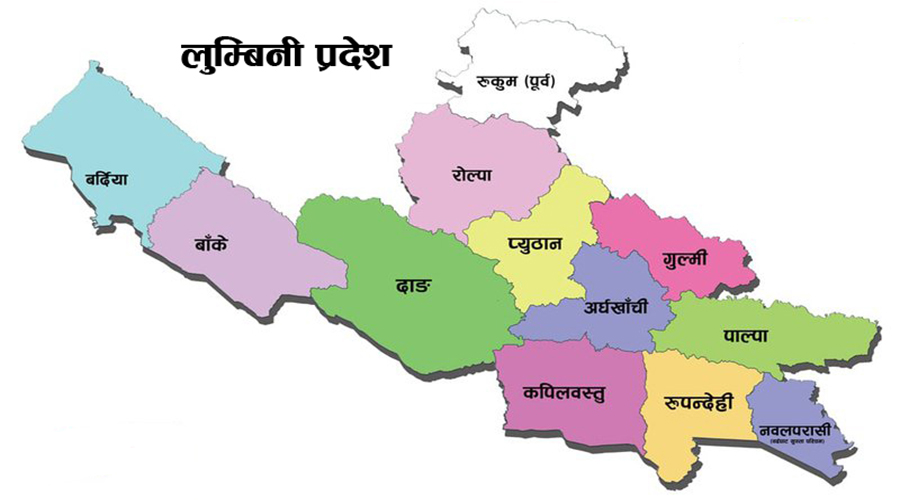

Pokhara, 8 March| In a historic and unprecedented political upheaval, the Rastriya Swatantra Party (RSP) has emerged as the dominant force in Lumbini Province, securing an overwhelming victory in 21 out of 26 federal constituencies. This election result marks a significant turning point in Nepalese politics, as the newly formed party dismantled the long-standing bastions of traditional political giants. While the RSP established its hegemony across most of the twelve districts in the province, the established major parties, including the Nepali Congress and the Nepal Communist Party (NCP), were reduced to just two seats each. The CPN-UML, which once considered Lumbini its strongest fortress, faced a humiliating setback, managing to secure only a single seat. The RSP’s surge resulted in a complete “clean sweep” in districts with multiple constituencies, such as Rupandehi, Dang, Nawalparasi West, Gulmi, and Bardiya, signaling a profound shift in the regional political psyche and a rejection of traditional leadership.
The most shocking aspect of this election was the defeat of several high-profile political figures, often referred to as “heavyweights.” CPN-UML Vice-Chairman and former Finance Minister Bishnu Poudel, along with fellow Vice-Chairman Gokarna Bista, General Secretary Shankar Pokharel, and influential leader Pradeep Gyawali, all suffered crushing defeats at the hands of RSP candidates. Similarly, prominent leaders from the Nepali Congress, including former Joint General Secretary Kishorsingh Rathore, Lumbini Province President Amar Singh Pun, and Dr. Govind Pokharel, failed to retain their seats. Other notable casualties included senior JSP-Nepal leader Sarvendra Nath Shukla and NCP leader Som Prasad Pandey. The scale of these defeats highlights a deep-seated public disillusionment with the established political order and an urgent yearning for alternative governance and fresh faces in the national parliament.
Delving into the district-wise details, the result in Rupandehi Constituency No. 2 stood out as the most dramatic upset. RSP candidate Sulav Kharel secured a massive 56,550 votes, defeating CPN-UML Vice-Chairman Bishnu Poudel by a staggering margin of 44,489 votes. Poudel, a veteran politician, managed to garner only 12,861 votes. In Rupandehi-1, RSP General Secretary Sunil Lamsal won convincingly with 54,845 votes, while in Constituency No. 3, Dr. Lekh Jung Thapa triumphed with 58,814 votes, maintaining a margin of over 50,000 against his nearest rival. The RSP also claimed victory in Rupandehi-4 and 5 through Kanhaiya Baniya and Toufiq Ahmed Khan respectively. Khan defeated UML’s Khim Lal Bhattarai by more than 25,700 votes. In Dang, the RSP’s dominance was equally apparent, with Joint General Secretary Bipin Kumar Acharya defeating UML General Secretary Shankar Pokharel in Constituency No. 2 by a margin of 28,275 votes. Devraj Pathak in Dang-1 and Kamal Subedi in Dang-3 also secured landslide victories.
The electoral wave in Gulmi followed a similar pattern of RSP dominance. Sagar Dhakal defeated UML veteran Pradeep Gyawali in Constituency No. 1 with 29,642 votes, while Govind Panthi edged out Gokarna Bista in Constituency No. 2 by a margin of 561 votes. In Nawalparasi West-1, Bikram Khanal, a former Congress leader who joined RSP just before the election, defeated billionaire industrialist and Congress leader Binod Chaudhary by approximately 35,000 votes. Nagendra Gupta of RSP won in Nawalparasi West-2 with 44,138 votes. In Kapilvastu, the RSP secured two seats through Mohan Acharya and Bikram Singh Thapa. Other significant victories for the RSP occurred in Palpa-2 with Madhav Bahadur Thapa, Arghakhanchi with Hari Prasad Bhusal, Pyuthan with Sushant Vaidik, and Banke with Suresh Kumar Chaudhary and Khagendra Sunar. In Bardiya, Thakur Singh Tharu and Shreedhar Pokharel delivered historic wins for the party, completing the regional sweep.
Despite the RSP landslide, traditional parties managed to hold onto a few symbolic strongholds. The Nepal Communist Party (NCP) preserved its legacy in its historical base, with coordinator Pushpa Kamal Dahal ‘Prachanda’ winning in Rukum East with 10,240 votes and Barshaman Pun securing Rolpa with 27,460 votes. The Nepali Congress managed to win two seats: Abhishek Pratap Shah in Kapilvastu-3 and Sandeep Rana in Palpa-1. Notably, Rana’s victory in Palpa-1 ended a 31-year dominance by the CPN-UML in that constituency. The CPN-UML’s solitary win in the province came from Banke-2, where Mohammad Ishtiyaq Rai, who had joined the party just a day before nominations, emerged victorious. Overall, the election results in Lumbini Province serve as a clear testament to the voters’ frustration with the traditional parties’ governance and their trust in a new alternative, a phenomenon that is expected to have long-lasting implications for the central power balance and the future trajectory of Nepalese democracy.